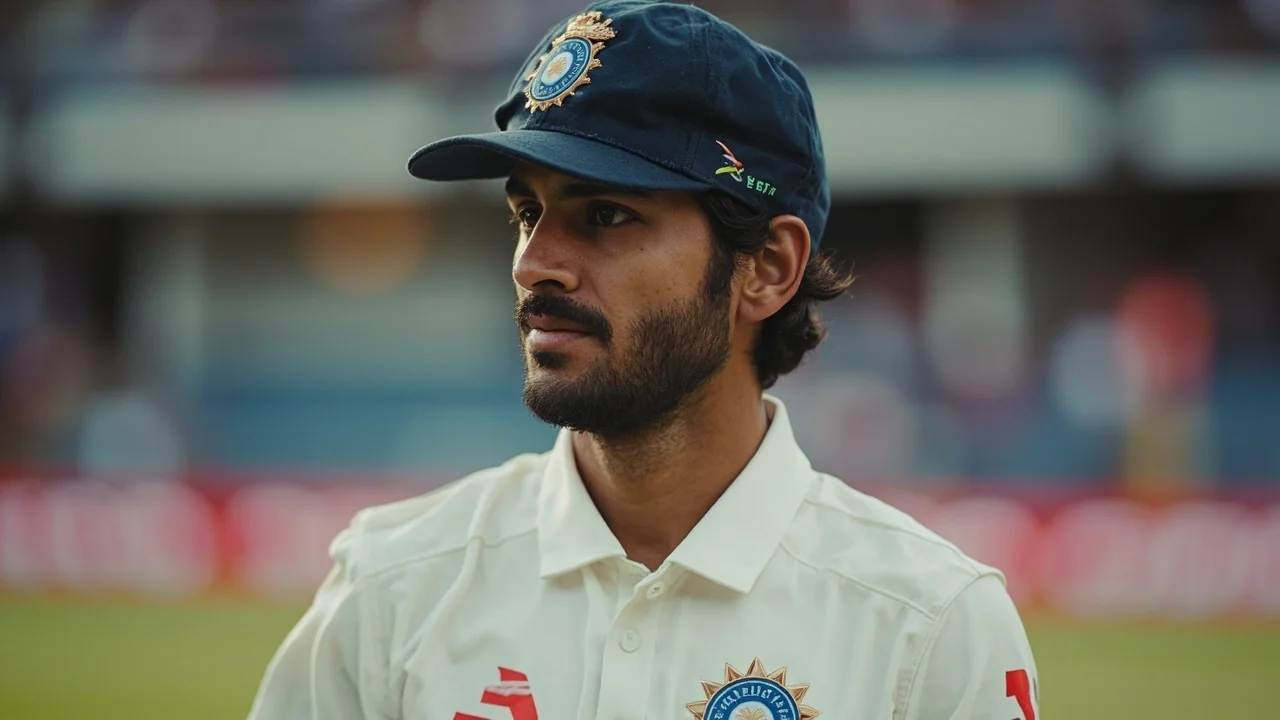
The temple-morning call that ended a decade of waiting
Saransh Jain had already left home and was on the road to a temple when his phone began to ring and buzz in the way phones do when the caller is not the person you expected. By the time he pulled over, the screen showed 10 to 12 missed calls and a stack of congratulatory messages from numbers he did not immediately recognise. A friend on the line confirmed what the missed calls implied: the India squad for the two-Test tour of Sri Lanka had been announced, and his name was on it. The off-spinner from Madhya Pradesh, who turned 33 earlier this year, had just become the newest member of the Indian Test squad.
In his first comments after the announcement, made to JioStar, Jain framed the moment simply and without embellishment. The selection, he said, was the culmination of 26 years of hard work and discipline; the decades stretching back to the first time he picked up a cricket ball at the club his father used to take him to in central India. The interview carries the cadence of a man who had prepared for the possibility for so long that the reality, when it arrived, did not need to be dramatic. He was on his way to a temple. He pulled over. He took the call.
That the announcement came on a weekday morning, that Jain was not at a ground or in a dressing room when the news broke, and that the immediate witnesses were a road and a phone screen, all speak to the unglamorous context in which most Indian domestic cricketers still receive the news of their first national call-up. The IPL builds most of the country's cricket celebrity around its two-month broadcast window, but the depth of India's red-ball squad is built across roughly 200 days of domestic cricket every year, and it is in that ecosystem that the Jain story has been written.
From tennis-ball cricket with his father to a dressing room with Dinesh Karthik
Jain's cricketing origin is the kind of story that gets told in zonal interviews and on club noticeboards but rarely surfaces in the broadcast footage. He started playing the game by going to the club with his father, a former Ranji Trophy player, and his elder brother. The first ball he bowled was a tennis ball; the move to the leather ball came later. His father, who remains his single biggest cricketing influence, is the reason he plays the game at all. The detail matters because it puts the rest of the story in context: the work ethic that has carried Jain through a decade of domestic cricket was not built inside the borders of an academy system, but inside the routine of a club ground where the net session was a family routine.
The first formal milestone of Jain's senior career came in the 2014-15 Ranji Trophy season, when he made his debut for Madhya Pradesh against Tamil Nadu and produced a five-wicket haul in the very first match. The opposition was not a soft launch pad. Tamil Nadu featured Dinesh Karthik, an India international across formats at the time, in their batting line-up. That Jain took five wickets against a side of that quality on debut is the kind of entry that selectors note even when they do not write about it publicly, and it is the foundation on which most of his subsequent domestic record has been built.
The shape of his career since then has been the shape of most successful domestic spinners in India: long, methodical, and out of the spotlight. He has not been an IPL player, he has not been a centrally contracted name, and he has not been a fixture in the broadcast highlight reels. What he has been is a year-on-year presence in the Madhya Pradesh attack, taking wickets on tracks that do not always assist spin, and producing the kind of line-and-length numbers that build an argument for selection over time rather than on the back of a single breakthrough tournament.
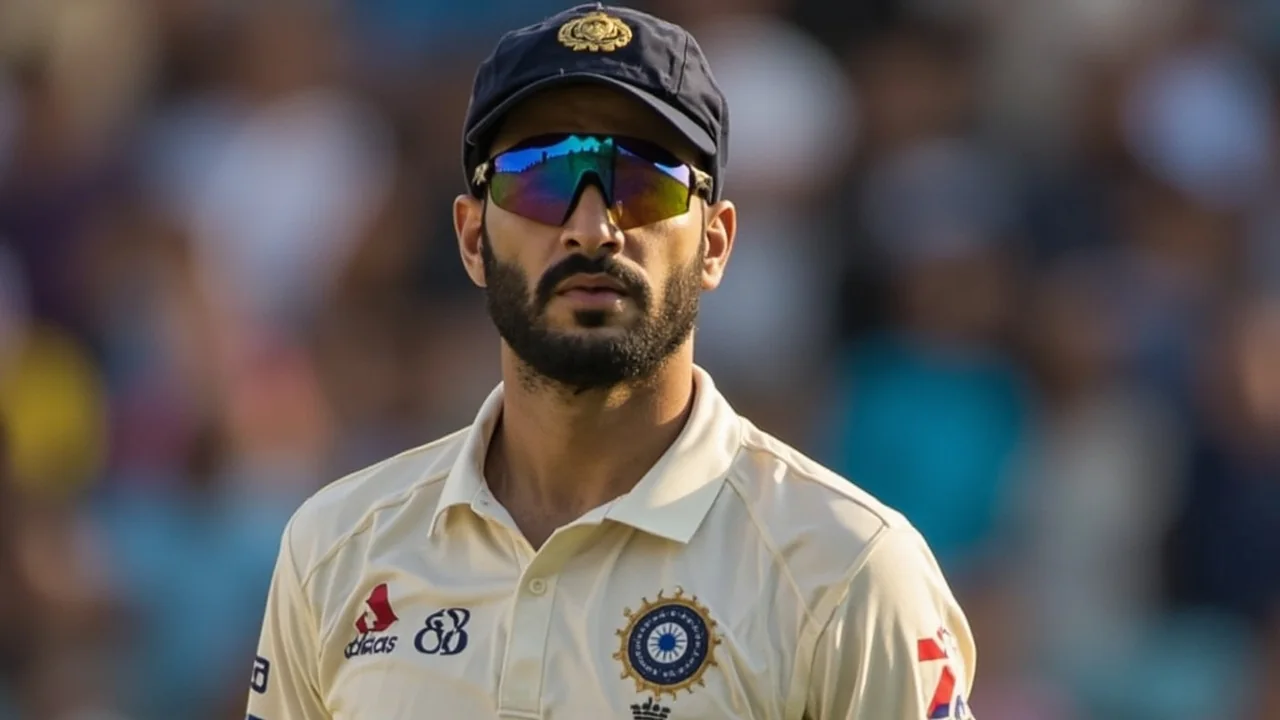
The weapon: accuracy, not mystery
When Jain describes his own cricket, the language he uses is plain and unsentimental. The main weapon, he has said, is consistency, the ability to hit the same spot repeatedly on a length that the batsman eventually has to take a risk to score from. The reference to risk-taking is the giveaway of how he has read the game: the off-spinner who understands that the longer a batter has to defend without scoring, the more likely the batter is to attempt a shot that produces a false stroke. The weapon is not big turn, not a carrom ball, not a disguised variation; it is the line outside off stump that the batter cannot leave and cannot score from cheaply.
That approach fits the current Indian cricket conversation in a specific way. The Test side has, for the better part of the last decade, relied on wrist-spin or all-format finger-spin match-ups built around R Ashwin and, before him, Harbhajan Singh. The off-spinner's role has narrowed to the third spinner slot, the fifth-bowler choice, or the variation in the home pitch. In that context, the kind of finger-spin that Jain offers is the kind that fits the subcontinental Test match: line on or just outside off stump, field set for the edge, and the patience to wait for the batsman to overplay.
The interview also makes clear that his cricket has been shaped by what he has watched from the other end. His two bowling idols are Harbhajan Singh and Ravichandran Ashwin, the two off-spinners who have defined what the role has looked like in Indian cricket for the last 25 years. The Harbhajan reference is the more striking of the two, because the two players are separated by a generation and by the structural changes that the IPL and the T20 calendar have wrought on the role. To grow up watching Harbhajan, and to come through the domestic pathway without an IPL auction contract, is to be a player who has built his career within the older Indian cricket model and is now being selected under the newer one.
The Harbhajan conversation at the BCCI Centre of Excellence
The most quoted piece of advice in Jain's interview is one he attributes to Harbhajan Singh, from a one-week camp at the BCCI Centre of Excellence in Bengaluru earlier this year. The line, paraphrased at length in the interview, is a piece of cricketing and life counsel that Jain has carried since the camp: you do not have to lose something to gain something; you have to put in the work. The advice is not novel. It is the kind of line that surfaces in any senior player's back catalogue. What is striking is the venue and the timing: a BCCI Centre of Excellence camp is not a casual interaction, and a one-week camp in the same year as a Test call-up is the kind of selection-adjacent exposure that selectors use to assess workload, temperament, and the readiness of a domestic stalwart for the next level.
The fact that Harbhajan is the source of the advice also hints at the kind of selection committee conversation that surrounds a domestic off-spinner in his 30s. The committee does not pick a 33-year-old debutant without some specific reasoning: the All-India record, the recent match-up read on the opposition, the workload profile, the character read. A camp at the BCCI Centre of Excellence is one of the few places where selectors can do the character read in person, and the fact that Jain emerged from one with a piece of advice that he can quote at length suggests that the camp worked the way it was supposed to.
Why a 33-year-old domestic spinner is the right fit for Sri Lanka
The Sri Lanka tour that Jain is being called up for is the two-Test series that follows the domestic off-season's central-window cricket. The playing conditions in Sri Lanka over the second half of the year are typically spin-friendly: the Galle and Colombo surfaces tend to deteriorate from the second innings onwards, the ball grips, and the role of the off-spinner shifts from a holding option to a primary wicket-taking one. The selection of a domestic off-spinner for the squad sits within that reading: the selectors are not picking a wrist-spin allrounder who needs to be managed through the workload, but a finger-spinner whose primary skill is the one that the surfaces will reward.
The squad context also matters. The Indian Test side is currently without the workload of Ashwin's full Test season, and the post-Ashwin rotation has been a theme of the last two home seasons. The depth chart behind the leading spinners has been a watchlist for the selectors for a while, and the inclusion of a 33-year-old domestic stalwart is a sign that the selectors are willing to test the depth in match conditions rather than in another India A tour. The two-Test window is short enough that the selection is a low-risk audition, and long enough that a debutant can demonstrate the consistency that the domestic record has been building for a decade.
The reading on the other side of the depth chart is also worth marking. The wrist-spin options in the broader squad discussion are typically the IPL-window names who have been managed through the white-ball window and rotated into the Test squad on the back of specific plans. The off-spin selection is a different kind of pick, and it tells a different story about how the selectors are building the squad for the conditions that Sri Lanka offers in the second half of the year.
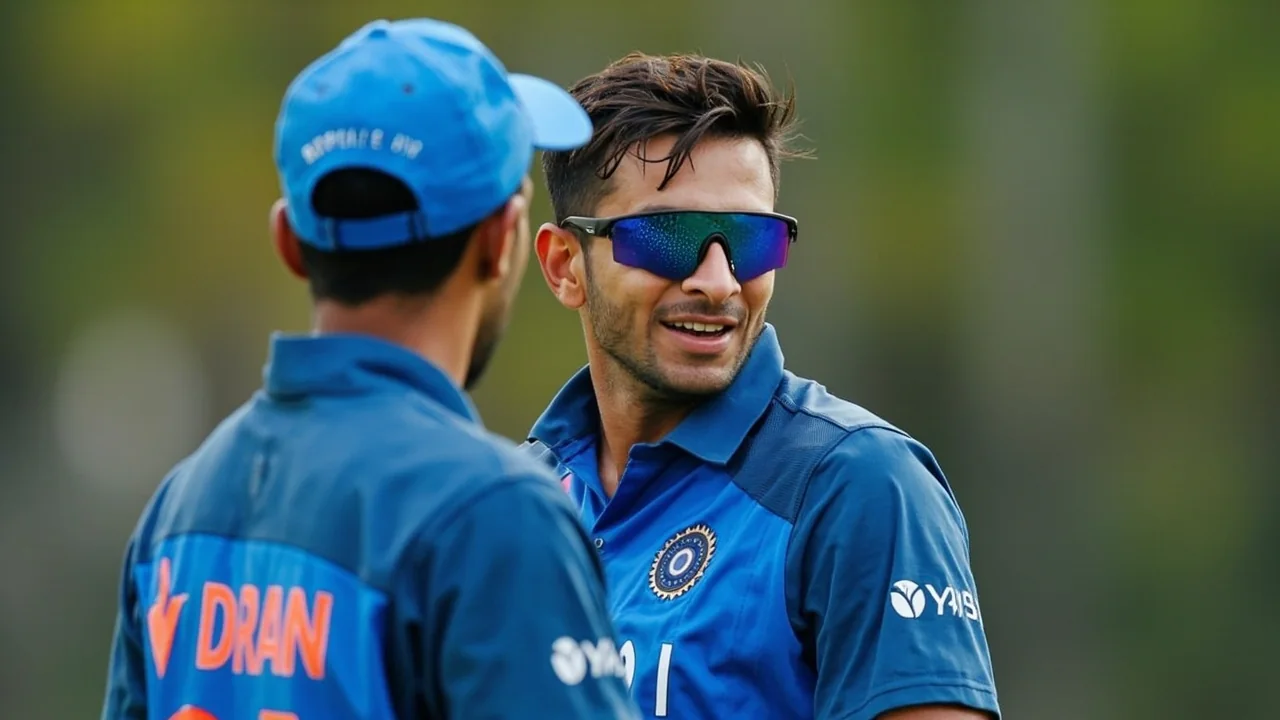
What Jain said about age, and the case he made for being undroppable
The age question is the one that drove the headline of the Yahoo Sports version of the interview, and it is the one that Jain addressed most directly. Age, he said, is just a number, and 33 is no different from any other number because of how high the fielding standards have become in the modern game. The implication is that the older argument that a 33-year-old spinner cannot field well enough to hold a Test place no longer applies; the modern fielding standards have reset the age curve for slow bowlers, and the off-spinner who can hold his end and dive at short leg is not a liability in the field. Jain said he had been certain the call would come; if not this year, then the next one or two.
That certainty is the kind of tone that sits strangely in a 33-year-old debutant's first interview. Most first-time Test players give the interviewer a story of surprise, of unexpected luck, of the phone ringing at a strange hour. Jain gave the interview the tone of someone who had been preparing for this conversation for a decade and was simply glad it had finally arrived. The certainty is a function of the work; the absence of any IPL chapter in the story is the thing that makes the certainty unusual within the contemporary Indian cricket ecosystem.
The read for the rest of the squad is that the off-spinner who came through without the IPL exposure has become the model for what the selectors want from a domestic Test-cricket addition. The IPL is a parallel skill set; it rewards different players, on different surfaces, in different roles, and it produces a different kind of cricketer. The Test off-spinner is built on the slow, repetitive work that the IPL's broadcast window does not tend to surface, and the Jain selection is the clearest signal in a while that the selectors are willing to pick the player who has built that work without the T20 detour.
What comes next on the Sri Lanka window and the road to the XI
The two-Test tour of Sri Lanka starts in the second half of August 2026 and runs for roughly ten days of match cricket. The first Test is the venue where the squad will be trimmed; the second Test is the one that the squad will be built around. For Jain, the realistic window is the second Test, with the first Test acting as the dress rehearsal and the fielding audition. The selectors typically give the debutant a Test rather than a T20I when the surface is expected to reward the player's skill set, and Sri Lanka's home surfaces are exactly that.
The other watchables in the squad are the workload management of the wrist-spin options, the role of the all-format seamers, and the batting order as the side moves out of the home Test cycle. The Sri Lanka tour is one of the small tours of the cricket calendar, but it is the venue where the next layer of Indian red-ball cricket is being auditioned. The Jain selection is the kind of story that does not require a single run or wicket to be a meaningful one; the very fact that a 33-year-old domestic off-spinner has been selected for a Test tour is the kind of selection signal that the cricket commentariat will read for the rest of the cycle.
For the broader reading list on the squad and the off-spinner depth chart, the India cricket coverage on Quriousbit tracks the squad announcement, the surface reads for the two Tests, and the role-bucket reads that fantasy operators will pull through to the IPL 2027 auction context. The Jain story is the kind of selection that gets mentioned in the same breath as the older Indian cricket stories of the players who came through the domestic pathway without the IPL detour, and it is a reminder that the depth of the Indian Test squad is built across the Subhedar-Junior-District-Ranji ladder rather than the auction table.
Frequently asked questions
Who is Saransh Jain?
Saransh Jain is a 33-year-old off-spinner from Madhya Pradesh who has been named in India's squad for the two-Test tour of Sri Lanka. He has played domestic cricket for Madhya Pradesh since his Ranji Trophy debut in 2014-15, when he took a five-wicket haul against Tamil Nadu in his first match, and he has not played in the IPL.
How did Saransh Jain learn of his India Test call-up?
Jain told JioStar that he was on his way to a temple when his phone showed 10 to 12 missed calls and congratulatory messages. He pulled over and a friend confirmed that the India squad for the Sri Lanka Tests had been announced and that his name was on the list. He described the moment as the culmination of 26 years of hard work and discipline.
What is Saransh Jain's primary bowling weapon?
Jain has said his primary weapon is consistency, the ability to hit the same spot on a length repeatedly and force the batsman to take a risk to score. The interview points to a finger-spinner who builds pressure through line and length rather than through big turn or mystery variations.
Who are Saransh Jain's bowling idols?
Jain has named Harbhajan Singh and Ravichandran Ashwin as his bowling idols. He credits a piece of advice from Harbhajan during a one-week camp at the BCCI Centre of Excellence in Bengaluru earlier this year as the line that stayed with him: you do not have to lose something to gain something; you have to put in the work.
Why is Saransh Jain's selection for the Sri Lanka tour a notable story?
The selection is notable because Jain is a 33-year-old domestic off-spinner with no IPL career, and because the selection is the clearest signal in a while that the selectors are willing to test the off-spinner depth through domestic stalwarts rather than only through IPL franchise players. The Sri Lanka surfaces are expected to reward the kind of finger-spin that Jain has built his career around.
What is the format and schedule of the Sri Lanka tour?
India will play two Tests in Sri Lanka starting in the second half of August 2026. The first Test is the venue where the squad will be trimmed; the second Test is the one the squad will be built around. The conditions are typically spin-friendly, with surfaces that grip from the second innings onwards.
What did Saransh Jain say about his age?
Jain said that age is just a number, that 33 is no different from any other number because of how high the fielding standards have become in the modern game, and that the question of whether a spinner can field well enough to hold a Test place no longer applies. He said he had been certain the call would come; if not this year, then the next one or two.