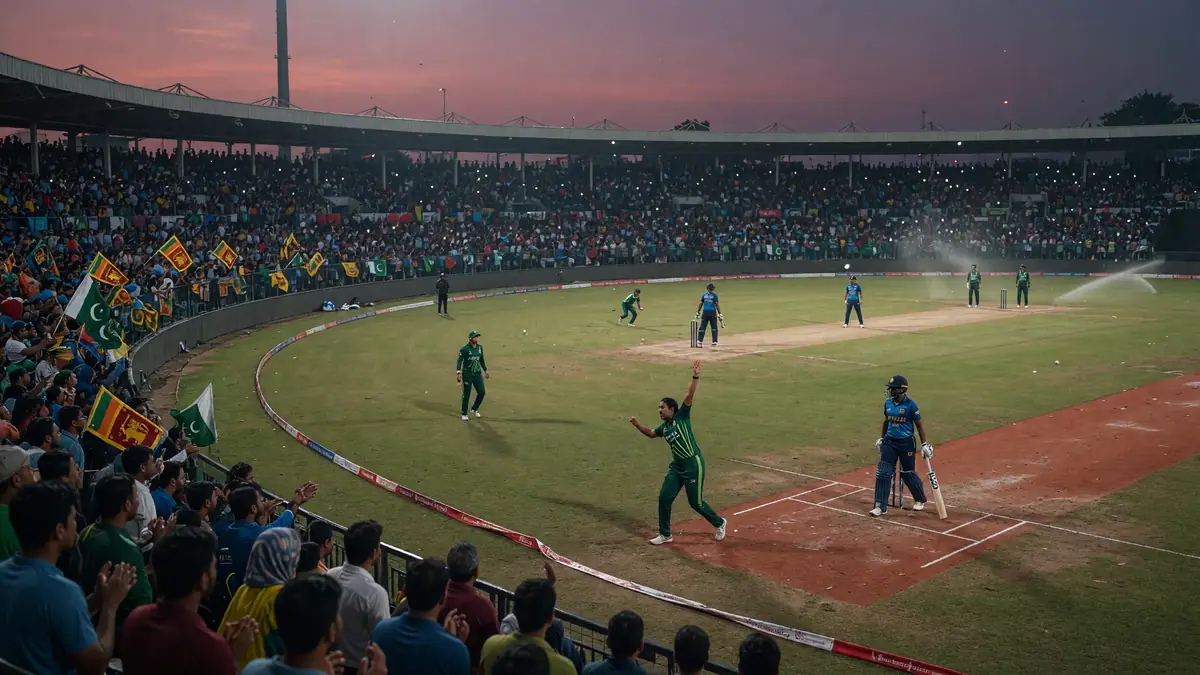
Sri Lanka Women host Pakistan Women in the second Twenty20 international of the 2026 bilateral series at Rangiri Dambulla International Cricket Stadium on Sunday, 2 August 2026, with the first ball scheduled for 10:00 AM IST. The hosts already lead the series after winning Friday’s opener, so the visitors arrive needing a response rather than a free hit.
For fantasy players, that 1-0 scoreline matters more than a simple form table. Sri Lanka can pick from a position of control, while Pakistan must decide whether to stay patient with an under-performing batting order or force a more aggressive top-order answer. The Dream11 market will price Sri Lanka names higher on ownership; the contest edge sits in how you split captaincy, spin exposure and the few Pakistan differentials still carrying recent numbers.
Live streaming is listed on Sony Sports Network and Sony LIV. Final XIs lock at the toss, so treat every side below as a pre-toss template and rebuild only if a named all-rounder or frontline spinner is rested.
Match snapshot: series context and recent form
Pakistan Women’s tour of Sri Lanka 2026 has already tilted toward the hosts. Sri Lanka won the first T20I on Friday and now defend a series lead at home. Across the last five women’s T20Is, Sri Lanka’s listed form reads W, W, W, L, W. Pakistan’s corresponding stretch is L, W, L, L, L, including a fourth defeat in five completed games.
Head-to-head over the last four completed meetings also favours Sri Lanka: three wins to one, with no no-result. That does not guarantee Sunday, but it does explain why Chamari Athapaththu’s side will sit as the safer core in both small leagues and grand leagues. Pakistan’s recent batting has leaned on a handful of individuals rather than a settled top four, which raises ceiling for differentials and lowers floor for full Pakistan stacks.
Weather notes for Dambulla list temperatures around 32-33°C, humidity near 55% and only about a 14% rain chance. A full game is the base case. Fantasy planning should therefore assume a complete 20-over contest rather than a shortened template.
Dambulla pitch and role weighting
Venue notes for Rangiri Dambulla put average first-innings scores in the 150-160 band, with published averages of about 153 batting first and 145 batting second. The batting-first win rate is listed at 67%, and spin suitability at roughly 55%. Those three figures pull the build in a clear direction.
First, top-order batters who face the new ball still matter, because 150-plus totals reward early anchors who convert starts. Second, chasing sides may face a slightly lower average target band, so wicket-taking bowlers in the middle overs retain value even when the chase looks modest on paper. Third, spin is not a novelty pick here: at least two specialist or part-time spinners belong in most 100-credit sides unless the toss XI removes them.
For captaincy, a batting-first win lean often lifts openers and No. 3 batters who set the tone. If Sri Lanka bowl first, their frontline spinners become more attractive vice-captain options because a defence of 150-plus multiplies wicket and economy points. Hold both templates until the toss rather than forcing one narrative.
Probable Sri Lanka Women XI and fantasy signals
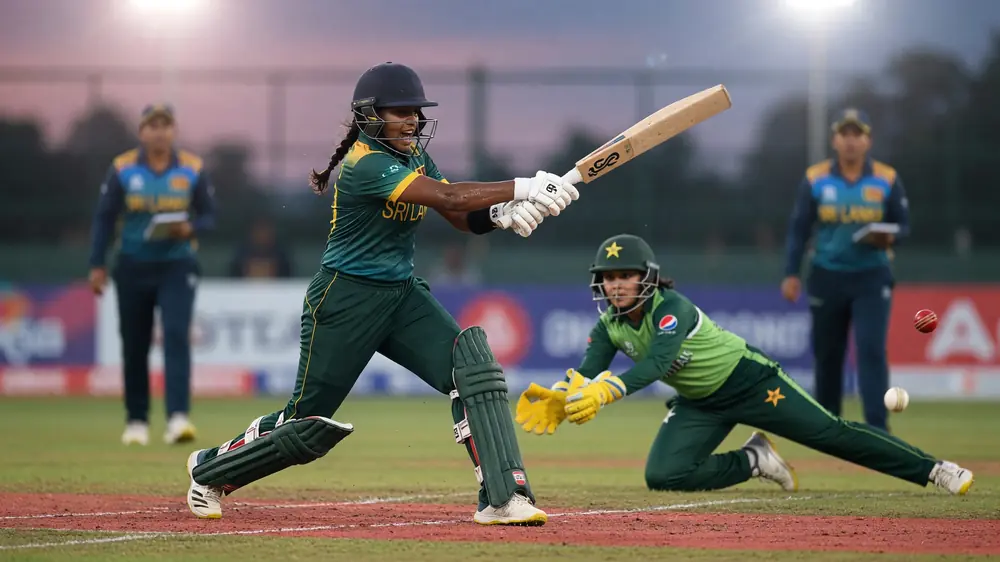
The probable Sri Lanka XI is listed as Chamari Athapaththu (captain), Hasini Perera (wicketkeeper), Imesha Dulani, Vishmi Gunaratne, Harshitha Samarawickrama, Kavisha Dilhari, Nilakshika Silva, Rashmika Sewwandi, Kawya Kavindi, Sugandika Kumari and Chamodi Praboda.
Athapaththu remains the default premium. Even on a quieter personal day she influences field and bowling changes, and her ceiling with the bat keeps her in almost every serious small-league core. Recent numbers attached to the series window credit her with 39 runs in the cited sample, which is solid rather than explosive, but ownership will still be high because alternatives at her price rarely match the dual threat.
Imesha Dulani is the breakout batting name from the supplied figures, with 101 runs in the recent sample. That volume moves her from optional middle-order filler to near-mandatory in grand-league builds that want Sri Lanka batting concentration without tripling openers. Harshitha Samarawickrama and Vishmi Gunaratne supply continuity through the middle; pick one if credits are tight, both if you are stacking the hosts after they bat first.
Kavisha Dilhari is the clearest Sri Lankan all-round route: 16 runs and 2 wickets in the cited recent numbers. On a surface tagged for spin, her bowling overs can matter as much as a cameo. Sugandika Kumari also carries 2 wickets in the same sample and belongs in spin-heavy sides, especially if Sri Lanka defend. Hasini Perera keeps wicket and opens a path to catch points, but pure batting returns still trail Dulani and Athapaththu unless she is confirmed high in the order at the toss.
Probable Pakistan Women XI and differential routes
Pakistan’s probable XI is listed as Muneeba Ali (captain and wicketkeeper), Ayesha Zafar, Eyman Fatima, Shawaal Zulfiqar, Eman Naseer, Umm-e-Hani, Saira Jabeen, Nashra Sandhu, Waheeda Akhtar, Humna Bilal and Momina Riasat.
Muneeba Ali is the visitors’ safest batting pillar and the natural small-league Pakistan anchor. She is credited with 42 recent runs and combines captaincy responsibility with keeping duties, which can add low-variance fielding points. In small leagues, one Pakistan batter is often enough; Muneeba is that batter unless a late XI shock promotes a hotter name above her.
Shawaal Zulfiqar is the primary differential from the batting card, with 63 runs in the cited sample. Grand-league sides chasing upside against a Sri Lanka-heavy field should look here before spraying credits across unproven lower-order names. Ayesha Zafar appears in the publisher’s grand-league vice-captain suggestion and works as a second Pakistan batter when you need correlation without taking three fragile top-order risks.
Nashra Sandhu is the bowling standout, with 2 wickets in the recent numbers. On a Dambulla pitch that rates spin above even, she is the cleanest Pakistan bowling priority. Waheeda Akhtar and Humna Bilal offer pace variation, but unless the toss pitch looks greener than expected, spin and top-order batting should still consume most of the Pakistan budget.
Captain and vice-captain splits
Two published fantasy templates sketch the main captaincy fork. The grand-league leaning side names Chamari Athapaththu captain and Ayesha Zafar vice-captain. The small-league leaning side names Muneeba Ali captain and Kavisha Dilhari vice-captain. Both constructions are coherent; they simply optimise for different variance.
Athapaththu as captain is the percentage play when you expect Sri Lanka to control the match and post or chase a 150-plus total. Pairing her with Zafar as vice-captain adds a Pakistan batting spike without abandoning the host core. That combination fits multi-entry grand leagues where you need one or two lower-ownership levers beside a popular captain.
Muneeba as captain is the contrarian small-league route if you believe Pakistan’s top order stabilises and the contest stays within a single batting stand. Dilhari as vice-captain then covers the spin and middle-overs wicket path on the Sri Lanka side, giving you a second points stream if the match becomes a bowling grind rather than a pure run feast.
A practical third split for cash games is Athapaththu captain and Dilhari vice-captain: maximum Sri Lanka correlation, lower uniqueness, higher floor. Use that when you are entering one or two teams only and cannot afford a full Pakistan captaincy miss.
Sample Dream11 structures under a 100-credit lens
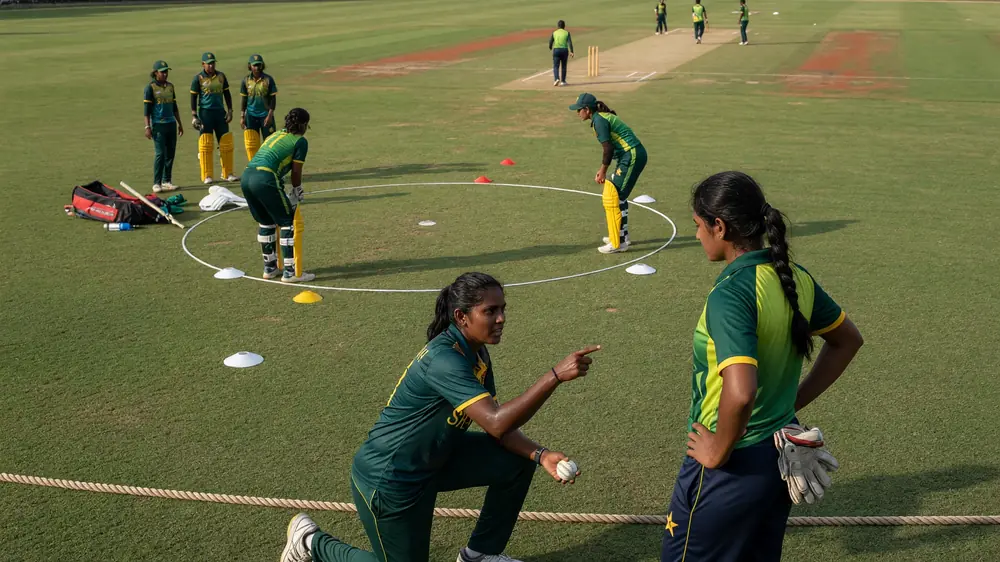
Build A, host-heavy small league: Athapaththu (C), Dilhari (VC), Dulani, Samarawickrama, Perera, Kumari, Muneeba, Sandhu, plus two flex spots from Gunaratne, Silva or a second Pakistan batter. This side accepts high Sri Lanka ownership and uses Muneeba and Sandhu as the away bridge.
Build B, grand-league spike: Athapaththu (C), Zafar (VC), Dulani, Zulfiqar, Dilhari, Sandhu, Kumari, Muneeba, with remaining credits on one Sri Lanka middle-order batter and one Pakistan pace or spin option. The idea is two Pakistan batting differentials beside a safe captain, not a full away stack that collapses if the top order fails again.
Build C, spin lock: Dilhari, Kumari, Sandhu and Umm-e-Hani if confirmed, paired with Athapaththu, Dulani and Muneeba. Use this only if both teams confirm spin-friendly XIs and the toss pitch report stays dry. Do not force four spinners if one side names an extra seamer after winning the toss.
Credits will flex with platform pricing, so treat the structures as role maps rather than locked names. If Dulani is priced as a premium after her 101-run sample, you may need to drop one Sri Lanka middle-order batter to keep Sandhu and a second spinner.
Toss rules and last-minute checks
Wait for confirmed XIs before finalising captain and vice-captain. The highest-risk pre-toss assumption in this fixture is Pakistan’s middle-order order itself: a late promotion for Zulfiqar or Zafar changes differential value immediately. On the Sri Lanka side, confirm whether Dilhari bowls her full allotment and whether Kumari keeps her new-ball or middle-over role from Friday.
If Sri Lanka bat first, overweight top-order hosts and keep one chasing Pakistan batter. If Pakistan bat first, Muneeba and Zulfiqar rise, and Sri Lanka spinners gain pursuit value in the second innings. Either way, avoid more than three pure bowlers unless the surface report turns unexpectedly two-paced after the toss inspection.
For readers tracking ball-by-ball fantasy movement after lock-in, keep the series coverage with the rest of the desk’s live matches centre once the innings begin. Pre-match templates stop mattering the moment the first wicket cluster lands; in-play rank movement is a different skill.
Match prediction and series implication
The published match lean is Sri Lanka Women to win and close the T20I series 2-0. That call tracks the 1-0 lead, the 3-1 edge in the last four head-to-head meetings, and Pakistan’s L-W-L-L-L form line. It is a form-based lean, not a locked result: one top-order stand from Muneeba and Zulfiqar plus early wickets from Sandhu would reopen the series.
Fantasy players should separate match winner from captain choice. You can still captain Muneeba in a minority of grand-league entries while expecting Sri Lanka to win the fixture. Correlation helps, but blind stacking of eleven hosts leaves no path if Pakistan’s top two finally convert.
Frequently asked questions
When is the SL-W vs PAK-W 2nd T20I?
Sunday, 2 August 2026, with a 10:00 AM IST start at Rangiri Dambulla International Cricket Stadium.
Who leads the series heading into the match?
Sri Lanka Women lead 1-0 after winning the first T20I on Friday.
Where can fans watch the game?
Live streaming is listed on Sony Sports Network and Sony LIV.
Who are the standout captain options?
Chamari Athapaththu is the primary host captain; Muneeba Ali is the main Pakistan alternative. Kavisha Dilhari and Ayesha Zafar are the featured vice-captain routes in the two published templates.
What does the Dambulla pitch usually do?
Venue notes point to first-innings averages near 153, second-innings near 145, a 67% batting-first win rate and about 55% spin suitability.
Which recent player numbers matter most?
Imesha Dulani 101 runs, Shawaal Zulfiqar 63, Muneeba Ali 42, Chamari Athapaththu 39, plus two-wicket hauls for Kavisha Dilhari, Sugandika Kumari and Nashra Sandhu in the cited sample.
What to lock before the first ball
Carry a Sri Lanka batting spine, keep at least one Pakistan batter who already owns recent runs, and protect spin overs on both sides. Finalise captaincy only after the toss confirms who bats first and whether Dilhari and Sandhu retain full bowling loads. Sunday’s game can end the series for Sri Lanka or pull Pakistan level; the Dream11 edge sits in pricing that fork without abandoning the players already producing numbers in this window.