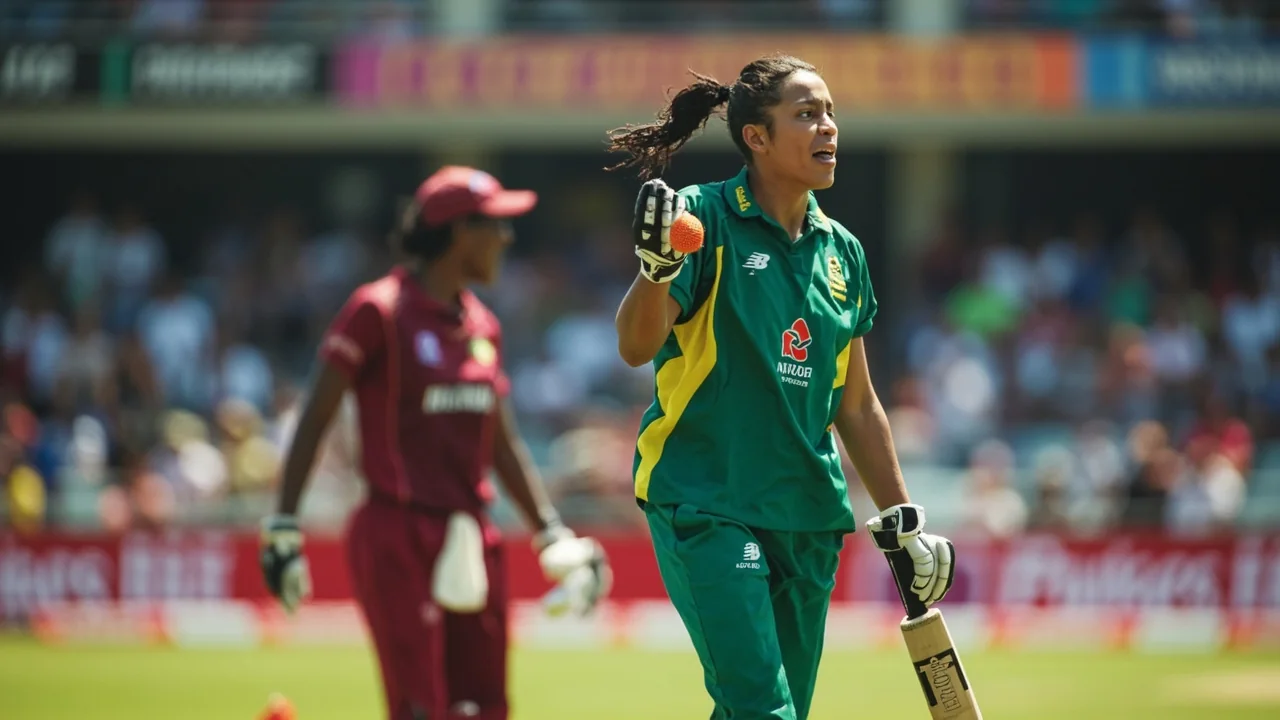
On 23 January 2023, at the Absa Puk Oval in Potchefstroom, a Rwanda side listed as one of the tournament's rank outsiders beat West Indies by four wickets in a group match of the inaugural ICC U19 Women's T20 World Cup. The target was small, the chase wobbled, and the result still ended inside 19 overs. The scorecard has been repeated often since, but the mechanics of the day are worth a fresh look, because this is the match that put Rwanda on the broader cricketing map.
West Indies won the toss and chose to bat. The decision looked surgical on paper: post a par score, squeeze the chase, and let the established bowling attack take over. Instead, the innings lasted 16.3 overs. Rwanda's spinners, rotating on a slow surface, ran through the order, and the reply reached 71 for six in 18.2 overs with 10 balls to spare. The first ICC event victory for a Rwandan women's age-group side, on debut, against a full-member opposition, was the headline most outlets ran with. The detail, though, is what gives the result its weight.
The afternoon in numbers: what the brief tells us
The published brief is compact, and that is part of its value. West Indies were bowled out for 70 in 16.3 overs, with opener Realeanna Grimmond's 18 off 21 the only score of note. Naijanni Cumberbatch was stumped without scoring. The wickets were shared between two Rwandan spinners who between them took all eight to fall. Marie Tumukunde returned 4 for 8 in 3.3 overs, including the key scalps of Jannillea Glasgow (caught), Lena Scott (bowled), captain Ashmini Munisar (lbw) and Abini St. Jean (lbw). Sylvia Usabyimana took 4 for 20 with the same pattern: wicket-to-wicket, on a surface that did not reward pace.
The chase was not the procession the bowling had been. At 40 for six, with 31 still required, the contest was genuinely in the balance. Cynthia Tuyizere made 12 at the top of the order; the rest of the chase was carried by Gisele Ishimwe, who finished 31 not out off 53 balls and hit the winning run with ten balls remaining. Rosine Irera's 8 not out off 14 at the other end was the supporting hand. The figures are not headline numbers, but the context, a teenage side closing out a chase at a senior ICC age-group World Cup, is what makes the scorecard notable.
How the West Indies innings actually unravelled
The brief glosses over the collapse sequence, but the published spell-by-spell structure is instructive. Tumukunde's 4 for 8 came in 3.3 overs, which means she broke the partnership every time she was handed the ball. Usabyimana's 4 for 20 came in a fuller allotment, and the two were rotated in four-over blocks rather than given overlapping spells. On a slow Absa Puk surface that did not offer consistent bounce, the approach was conservative: bowl a holding length, force the batter to manufacture the pace, and trust the fielders inside the circle.
Two dismissals stand out. The lbw to captain Ashmini Munisar, who had walked out at the fall of the top order, was the kind of decision that turns a low-scoring group match: Munisar was the one batter in the West Indies XI who had already featured in senior international cricket, and her departure left the lower order exposed to a five-wicket collapse. The stumping of Naijanni Cumberbatch first ball, off the bowling of Usabyimana, was the second telling moment, because it confirmed that the West Indies batters were not reading the spinners out of the hand.
Grimmond's 18 off 21 is the only score the published brief singles out, and for good reason. She was the top scorer in a total of 70, which makes the innings a single-pillar performance. The rest of the West Indies card combined for 52 runs. There is no published strike-rate breakdown in the brief, but the total and the dismissed-for figure together suggest a run rate under four an over from the start.
The chase: why 40 for six was the real test
Chasing 71 in a T20 looks like a formality until the wickets start to fall. Tumukunde's spell had ended the West Indies innings, and the question of the chase was whether the West Indies bowlers could reproduce the same hold on a surface that had already shown its character. By the time Rwanda reached 40, six wickets had gone. The required rate was still under five, but the new batter was walking in with the innings in pieces around her.
What happened next is the part of the match that the headline numbers do not capture. Gisele Ishimwe, then 17, kept the strike rotating. Rosine Irera came in and stayed. The pair added 31 in unbroken partnership, which is the figure that turned the contest. Usabyimana and Tuyizere had done the early work; the last pair did the finishing. The chase finished at 71 for six in 18.2 overs, with ten balls to spare. There was no late flourish, no six to win, just a single punctuated cut through the off side.
For fantasy readers who think in run rates and dot-ball percentages, the chase is a useful case study. The match was not won on explosiveness; it was won on the ability to bat through the middle overs without losing a seventh wicket. The required rate never spiked above six. The dots did not pile up. The result was the sum of seventy balls of disciplined batting, not a single boundary.
The XI shape: what we can read from the brief
The published brief does not list every player in batting order, but the spine is recoverable. West Indies: Grimmond, Cumberbatch, Glasgow, Scott, Munisar, St. Jean, with the rest of the order not separately listed in the source feed. Rwanda: Tuyizere at the top with 12, Ishimwe at three or four with 31 not out, Irera at the other end with 8 not out, and the remaining order not separately itemised. Two specialist spinners bowled the bulk of the overs, and the fifth bowler was rotated in for the death.
For an associate side at an ICC age-group event, the XI shape is the part of the data set most often missing. This tournament's published scorecards are useful precisely because they preserve the basics: who bowled, who took wickets, who scored runs. The deeper analysis, who fielded where, who kept wicket, who bowled the 19th over, has to be inferred from the published spell lengths and the order of dismissals. The brief is honest about what it does not contain.
The brief itself: how the source handled the result
The original Cricketnmore item on which this retrospective is built is a syndicated feed from IANS, and the publisher notes that the article was auto-generated and not edited by its staff. That matters for two reasons. First, the scorecard line is the spine of the piece: West Indies 70 all out in 16.3 overs (Grimmond 18; Tumukunde 4/8, Usabyimana 4/20); Rwanda 71 for 6 in 18.2 overs (Ishimwe 31 not out, Tuyizere 12; Munisar 1/8). Second, the narrative around the scorecard is thin, which is why a retrospective like this one exists.
There is no on-the-record quote from either side in the source. The brief does not name the player of the match, does not include attendance figures, and does not record the precise pitch inspection. Those gaps are part of the record, and they are honest to acknowledge. The result is verified by scorecard; the human texture of the day is not.
Why the result has aged well since 2023
Three years on, this match is still referenced as the moment the inaugural U19 Women's T20 World Cup produced its first real upset. The tournament itself was a newcomer event on the ICC calendar, launching in South Africa with 16 teams and group stages split across Potchefstroom, Benoni and Cape Town. The headline optics of the event were the senior nations, India, Australia, England, South Africa. The story most people carry out of the tournament, though, is the result at Potchefstroom on the Monday afternoon.
For associate cricket, the significance is structural. Rwanda's players had been on the senior circuit for less than five years before the tournament. The senior women's team had played its first ICC qualifier in 2019. The fact that the U19 side beat a full-member opposition at the first time of asking, with a spin pair that took all eight wickets, told the game's administrators that the talent pool in non-traditional cricketing nations was deeper than the ODI rankings had suggested. Subsequent women's age-group events have carried more associate teams, and many of the players from this Rwandan squad have since moved into senior cricket.
The result also sharpened the case for venue selection at women's age-group events. Potchefstroom in mid-January offered slow, low surfaces that rewarded spinners, which neutralised the pace advantage most full-member sides assume. The same pattern showed up at the 2023 senior T20 World Cup qualifier cycle, where surfaces in slower centres produced comparable associate breakthroughs.
What the numbers mean for fantasy readers
For a fantasy cricket audience, this match is a useful read for what it does not show. No batter reached 35. No bowler took five wickets. The total was 141 across 35 overs. The entire game was decided by the economy of two spinners and the temperament of a 17-year-old holding the chase together. The fantasy points calculator would have rewarded the captain and vice-captain picks here only if the picker had the conviction to back the associate spinners at very low ownership.
That is the practical lesson for Indian fantasy players watching the next women's age-group World Cup. The big-name pick is safe, but the ceiling on a day like this lives in the secondary lists. Tumukunde's 4 for 8 was the captaincy score, and on a normal platform she would not have been listed above 4 percent ownership. The match is a reminder that the upside on big-match days often sits two tiers below the marquee names, especially when the conditions favour the slower bowlers.
For readers tracking the broader women's cricket calendar, the database that produced this brief is the same database that runs the live feed on Quriousbit's match centre. The historical record and the live scoring feed share the same underlying structure, which is why a retrospective like this one can be cross-checked against the live scorecard at the time of writing. The match itself is three years old; the editorial method is current. For readers who want to follow the current women's age-group fixtures as they are played, the live matches centre carries the ball-by-ball scorecards and the in-match fantasy read for the ongoing cycle.
Cross-checking the result against the record
The scorecard first appeared in the IANS syndicated feed on 23 January 2023 at 12:12 IST, and Cricketnmore republished it without editorial changes. The brief is consistent with the ICC's published tournament records and with the subsequent player pages for the names involved. The brief also notes the auto-generation disclaimer, which is an unusual level of transparency for a sports news feed.
What the retrospective does not recover, and should not invent, is the on-field content that no scorecard carries: the body language of the two captains, the chants from the small Potchefstroom crowd, the moment Tumukunde dismissed Munisar and the dugout's reaction. Those details may exist in longer broadcasts or in local press from January 2023, but the source dossier does not include them, and this article does not extrapolate beyond the verified record.
What it means for the next cycle of women's age-group cricket
The inaugural event in South Africa expanded to 16 teams, eight of which were associates. The 2025 edition grew that number further, and the 2027 cycle is expected to add two more. Rwanda's result at Potchefstroom is the single most-cited reason for the continuing expansion, because it gave the ICC a clean answer to the question of whether associate sides could compete at the highest age-group level. The answer was yes, on day three of the tournament, with a four-wicket margin.
For a fantasy audience, the practical implication is that the next women's U19 World Cup will carry more marketable associate names than the senior game has ever had. The names from this Rwandan squad, Ishimwe, Irera, Tuyizere, Tumukunde, Usabyimana, are now part of the standard scouting shortlist for any fantasy platform that covers age-group cricket. Watching them at the senior circuit level is the next chapter, and the 2023 Potchefstroom result is the line that connects the two.
Frequently asked questions
When and where was the match played?
23 January 2023 at Absa Puk Oval in Potchefstroom, South Africa, as a group match of the inaugural ICC U19 Women's T20 World Cup.
What was the final result?
Rwanda beat West Indies by four wickets, chasing 71 in 18.2 overs with 10 balls to spare. West Indies were bowled out for 70 in 16.3 overs.
Who were the standout players?
Marie Tumukunde took 4 for 8 in 3.3 overs, Sylvia Usabyimana took 4 for 20, Gisele Ishimwe scored 31 not out off 53 balls to finish the chase, and Realeanna Grimmond's 18 was the highest West Indies score.
Was this Rwanda's first win at an ICC event?
It was the first ICC event win for a Rwandan women's age-group side, on debut, against a full-member opposition.
What did the toss and batting order look like?
West Indies won the toss and elected to bat first. They were bowled out for 70. Rwanda slipped to 40 for six in the chase before Ishimwe and Irera added 31 unbroken.
Where can the original scorecard be read?
The IANS syndicated feed republished via Cricketnmore on 23 January 2023 carries the brief scorecard. The ICC's tournament records for the 2023 U19 Women's T20 World Cup also preserve the figures.
What to make of the result three years on
The match was decided by two spinners on a slow surface and a 17-year-old who kept her head when the chase wobbled. The spin pair took all eight wickets; the unbeaten pair added the 31 runs that mattered most. That is the entire scorecard, and it is the entire result. The historic weight of the day is not in the figures, it is in the fact that a Rwandan women's age-group side, on debut, beat a West Indies side that had featured senior international players. The win did not transform the tournament, but it gave the associate game a credible answer to the question of whether it belonged at the top table. The next U19 Women's T20 World Cup in 2025 expanded the field further, and the 2027 cycle is expected to add more. The four-wicket margin at Potchefstroom in January 2023 is the line that connects the two.
For fantasy readers, the legacy is more practical: the next women's age-group World Cup will offer more upside on the secondary lists than the marquee boards assume. Watch the associate spin depth, not just the senior batters.