The 30 July 2026 announcement, in one read
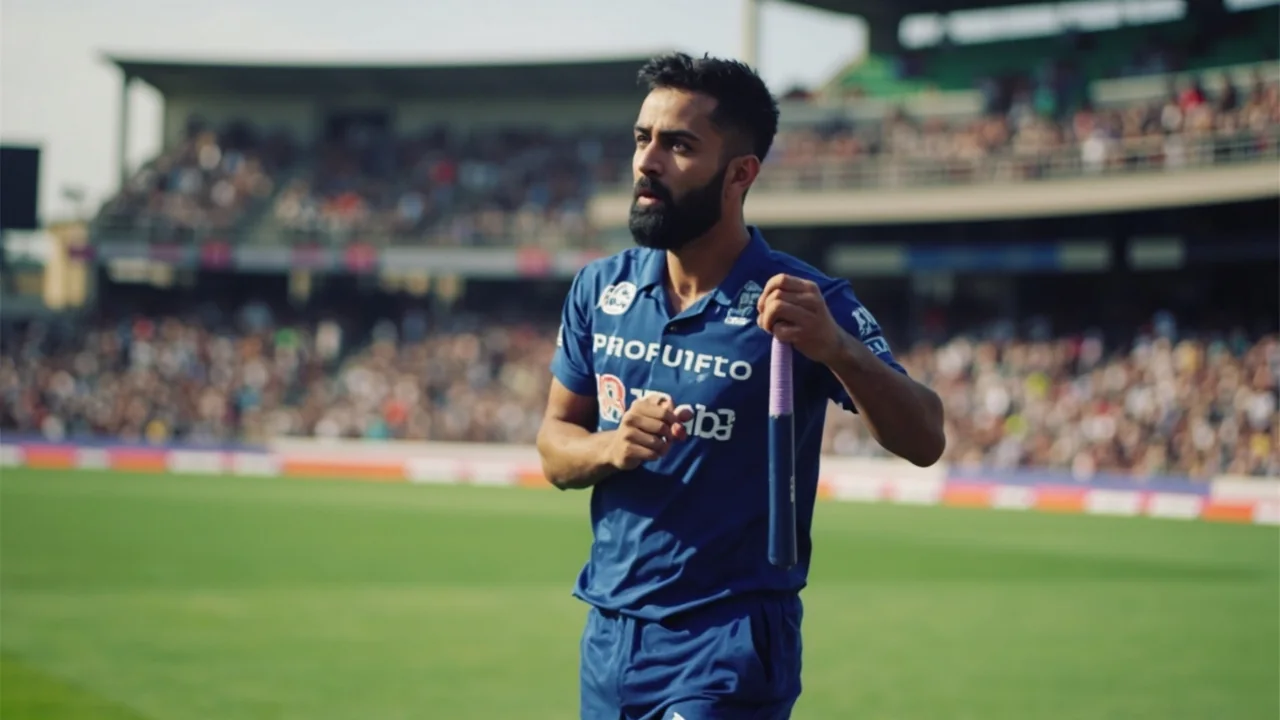
Ajinkya Rahane posted an emotional video message on the morning of 30 July 2026 confirming that he is stepping away from every form of competitive cricket with immediate effect. The 38-year-old had not played for India since the July 2023 Test against the West Indies at Port of Spain, and his last appearance on a cricket field was the 2026 Indian Premier League, where he captained Kolkata Knight Riders through 14 matches and finished with 335 runs. The video carried the closing line that will frame every obituary of his career: he thanked the BCCI, the Mumbai Cricket Association, every IPL franchise he has represented, and his wife Radhika, before pausing on the meaning of his own name, "unbeatable", and the observation that cricket, more often than not, beats the people who play it.
The numbers behind the announcement are the cleanest way to measure what India has just lost. Across formats, Rahane played 85 Tests for 5,077 runs, 90 ODIs for 2,962 runs, and 20 T20Is for 375 runs. He wore India cap number 278. The career opener was a T20I against England in 2011, where he made 69 off 31 balls while opening, and the first Test cap arrived in the fourth Test of the 2013 Border-Gavaskar Trophy in Delhi. The career closed with one Test innings of consequence after his recall: 89 and 46 in the 2023 World Test Championship final at The Oval, before the July 2023 Port of Spain Test served as his final India appearance. The format that gave him his first India cap is also the format in which he played the fewest games; the 20 T20Is sit alongside 90 ODIs and 85 Tests as a reminder that his T20 career never quite matched his red-ball weight, even as it was the format that opened the door for him.
From the 2011 T20I debut to the 2013 Border-Gavaskar cap
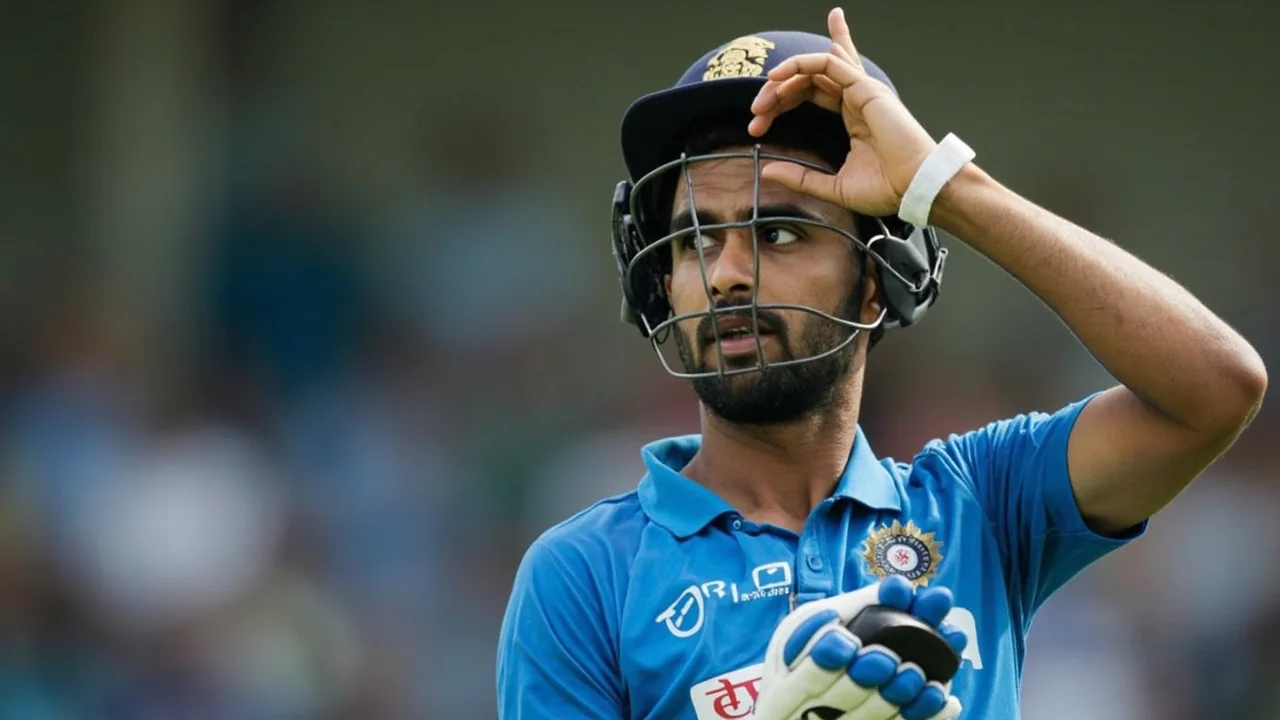
Rahane's India career did not start with a Test cap, and that sequence matters. The 2011 T20I call-up came on the back of a Mumbai Indians IPL spell that had put him in the national selector's eye, and his 69 off 31 balls while opening was the kind of counter-punching innings that white-ball cricket asks of a top-order batter who can play the fielding restrictions without overcommitting. The T20I debut was a single-match window, not a series lock; Rahane would play only 20 T20Is across the next 12 years, and the format that gave him his first cap never became his regular stage. The red-ball call came two years later, in the fourth Test of the 2013 Border-Gavaskar Trophy in Delhi, and from that point the weight of his career shifted decisively towards the longer formats.
The 2013 cap did not announce Rahane as a finished Test batter. His first few seasons were a stop-start negotiation with the No. 5 and No. 6 positions that India had cycled through since Rahul Dravid's retirement. By the time the 2014-15 home series against Australia and the 2015 tour of Sri Lanka had finished, Rahane had settled into the middle order with a template: bat long, bat calm, score in sessions, and let the more aggressive batters at the other end take the bowling apart. The template produced his first overseas Test century, his first home Test century, and the body of work that the selectors kept returning to through the rest of the decade.
The T20 career is the strand that explains why his retirement lands inside the T20 World Cup cycle even though he had no remaining T20I ambitions. Rahane opened the door in T20 cricket, returned to it intermittently as a top-order anchor in the IPL, and walked away from it while still active in the 2026 IPL with Kolkata Knight Riders. The 20 T20I caps were a footnote to his red-ball record, but they were the entry point, and his retirement closes the loop on a player whose career is bookended by the format he played the least.
The 2020-21 Border-Gavaskar Trophy: captaincy as the career's pivot
The match that will define Rahane's legacy is the 2020-21 Border-Gavaskar Trophy. India had been bowled out for 36 in the day-night Adelaide opener, Virat Kohli had departed for the paternity break that ended his Test captaincy, and the touring side needed a stand-in who could absorb a crisis that nobody on paper was set up to absorb. Rahane took the captaincy, moved up the order, scored 112 off 223 balls with 12 fours in the Melbourne Test to level the series 1-1, and then led India to a three-wicket win at The Gabba that ended Australia's 32-year unbeaten streak at the Brisbane venue. The 2-1 series win is the line on Rahane's CV that the retirement announcement reopens, and it is the line that his successor as a middle-order batter will be measured against.
The captaincy was a stand-in job, not a permanent promotion, and Rahane's handling of the role is the clearest evidence of the temperament that ran through the rest of his career. He did not try to be Kohli. He did not try to be a tactical innovator. He set fields that the bowlers could defend, gave his batters the longest possible rope, and let his captaincy presence be the steady middle that the dressing room could lean into. The MCG century and the Brisbane chase are the moments that get the headlines, but the quiet behind-the-scenes work - the team meetings that the broadcast cameras did not cover, the bowling rotations that did not show up in the match graphics - is the part that the India dressing room will remember when the next overseas Test tour comes around.
The captaincy also marked the moment when Rahane's place in the longer-format side was no longer in question. After Adelaide, the question was not whether he would play, but where in the order he would bat. The middle-order slot that India had been searching for since the 2014-15 home season had a permanent occupant for the first time in five years, and Rahane held it through the 2021 home series against England, the 2021-22 tour of South Africa, and the 2022-23 Border-Gavaskar Trophy at home. The WTC final at The Oval in June 2023, with scores of 89 and 46, was the high point of that middle-order era, and the Port of Spain Test a month later was the closing point.
The 2026 IPL as the farewell season, not the comeback
Rahane went into the 2026 Indian Premier League as captain of Kolkata Knight Riders, and the league became the only stage on which he was still a leading actor by the time of his retirement. The 335 runs in 14 matches are a modest return by his IPL standards - he has been past 400 runs in five previous IPL seasons - but the captaincy was the throughline, and the way KKR used him said everything about where his career had settled. He batted at the top of the order in the powerplay, gave the innings a platform that the middle order could launch from, and absorbed the new-ball phase that the more attacking batters were not set up for.
The IPL has been Rahane's second stage across formats, and his record on it is more complete than his T20I record. Across 212 IPL matches for Mumbai Indians, Rajasthan Royals, Rising Pune Supergiant, Delhi Capitals, Chennai Super Kings and Kolkata Knight Riders, he had scored 5,367 runs at a strike rate of 125.60 and an average of 30.15, with two centuries and 35 fifties. The 2026 season was the seventh franchise of his career, the second as captain of a side (he had previously led Rajasthan Royals), and the most natural bookend for a player who had decided that the IPL, not international cricket, was the format in which he had one more chapter to write.
The retirement announcement landed while he was still active in the IPL, which is the sequence that matters. He did not wait for the season to finish. He did not wait for the play-offs. He did not wait for a victory lap. The decision was immediate, and the timing reads as the same temperament that he brought to the Adelaide crisis in 2020: once the call is made, the call is made. The IPL will continue without him, but the 2026 season will be remembered as the season in which Rahane's international career closed, even as his franchise career was still in motion.
Mumbai cricket: where the career started and where the records stay
Rahane is a Mumbai cricketer through and through, and the domestic record is the other half of the retirement story that the international numbers do not capture. Across first-class cricket for Mumbai, he is the state's third-highest run-getter with 6,148 runs, behind only Wasim Jaffer and Ashok Mankad. In the T20 format, he is Mumbai's leading run-scorer with 1,829 runs in 67 matches, a record that nobody in the Mumbai dressing room has come close to in the years since. The domestic numbers are the ones that the Mumbai Cricket Association will carry forward, and they are the ones that the next generation of Mumbai batters will be measured against.
The 2023-24 Ranji Trophy title is the most recent domestic line on his record. Rahane captained Mumbai to a record-extending 42nd Ranji title, beating Vidarbha in the final, and the title was his last piece of silverware before the international retirement that has now arrived. The Ranji triumph is also the cleanest counter-example to the framing that Rahane's international career had drifted in the last two seasons. He had stopped being an India player in 2023, but he had not stopped being a competitive cricketer, and the Mumbai dressing room kept him in the leadership group that took the side to the title.
The retirement speech made specific mention of the Mumbai Cricket Association alongside the BCCI, and the order of the two mentions is not an accident. The MCA is where the career started, where the domestic record was built, and where the captaincy education that produced the 2020-21 Border-Gavaskar win was first tested. Rahane's farewell was as much to the MCA as it was to the BCCI, and the Mumbai dressing room will be the first place where the absence registers.
What the retirement means for the T20 World Cup cycle
The T20 World Cup angle is not the headline of this retirement, but it is the angle that the post-Rahane India dressing room will spend the most time on. India is the defending T20 World Cup champion after the 2024 title in the West Indies, and the next edition sits inside a calendar that the Rahane generation has already begun exiting. Rohit Sharma has retired from T20Is. Virat Kohli has retired from T20Is. Ravichandran Ashwin has retired from international cricket. Ajinkya Rahane is the fourth member of the 2020-21 leadership group to step away, and the timing means the next T20 World Cup cycle will be the first cycle in a decade where none of that quartet is in the selector's room.
The direct T20 World Cup impact on the squad is small. Rahane was not in India's T20 World Cup plans for 2026, and his 20 T20Is were spread across the years when he was more useful as a red-ball middle-order batter than as a T20I opener. The captaincy transition triggered by the 2020-21 Border-Gavaskar Trophy has long since been completed; the current India T20I captain is settled, the squad is settled, and the leadership structure that produced the 2024 title is in place. What Rahane's retirement changes is the depth chart that the selectors will lean on for the next bilateral cycle.
The more interesting T20 World Cup question is the one that lives two cycles away. The 2028 edition will be the first T20 World Cup where the entire India leadership group is drawn from the post-2011 generation, and Rahane's exit is one of the cleanest data points in that transition. The T20 World Cup squad that India takes to that tournament will be built around batters who watched the 2020-21 Border-Gavaskar win on television, not around batters who played in it. Rahane's retirement is not the cause of that transition, but it is one of the events that closes the door on it.
The 20 T20Is in context: a format he never quite owned
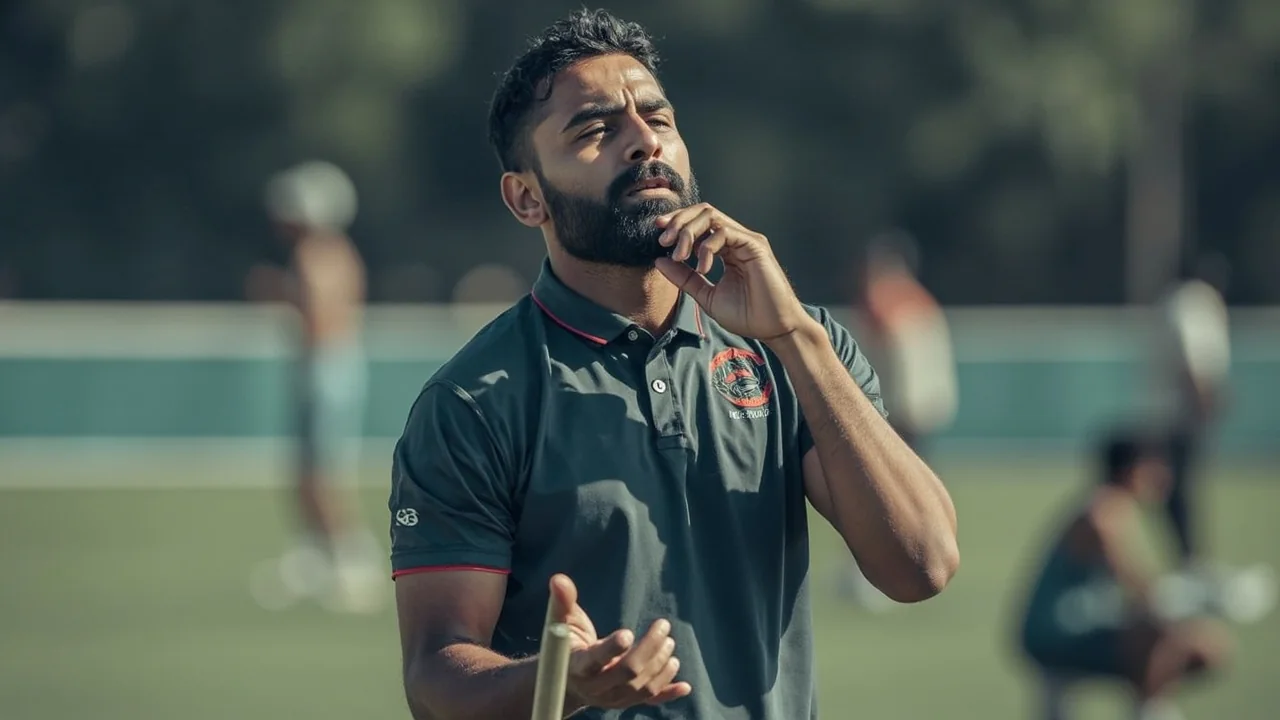
Rahane played 20 T20Is and scored 375 runs, an average of around 21 with a strike rate just below 120. The numbers are modest, and the T20I career never quite established itself as a settled phase the way the ODI and Test careers did. The reason is straightforward: the format asked for a kind of batting that Rahane did not have at his best. His game was built on batting long, batting calm, and scoring in sessions - the red-ball template that the ODI middle order could accommodate but the T20I top order could not. He opened the T20I innings when he was picked, and he opened it in a way that asked the bowlers to take the risks rather than taking them himself. That template produced his 2011 debut innings, but it also produced the years between selections, when the T20I squad preferred a more aggressive top-order option.
The 20 T20I caps are also the reason the retirement lands inside the T20 World Cup cycle. The format that gave him his first cap is the format in which he had the lightest footprint, but it is the format that the calendar keeps returning to. Every two years, the T20 World Cup cycle forces a re-examination of which middle-order batters are in the India pool, and Rahane's name was on that re-examination list right through the 2024 cycle. The 2026 cycle was the first in which his name was not on the list, and the retirement makes that omission permanent.
For the next T20 World Cup squad, the opening slot that Rahane used to occupy has been taken by a more aggressive top-order option, and the middle-order slot has been taken by a younger player who bats with the strike rate the format demands. The T20 World Cup evolution that the 2020-21 generation could not quite lead is being led by the players who followed them, and Rahane's exit is the data point that confirms the evolution is complete.
The retirement speech and the meaning of the name Rahane
The closing line of Rahane's farewell video turned on his own name. "Ajinkya" translates loosely to "unbeatable" or "invincible", a name that carries a promise the game rarely keeps. Rahane acknowledged the contradiction without bitterness: the name is the family name his parents gave him, the meaning is what the name says it is, and cricket, more often than not, beats the people who play it. The observation is not a complaint. It is the closing line of a 15-year career that included an Adelaide all-out for 36, a Port of Spain Test that was his final India appearance, an IPL season with KKR that did not reach the play-offs, and a stand-in captaincy in Australia that produced one of the great away Test series wins of the modern era.
He thanked the BCCI for the platform. He thanked the Mumbai Cricket Association for the foundation. He thanked the franchises - Mumbai Indians, Rajasthan Royals, Rising Pune Supergiant, Delhi Capitals, Chennai Super Kings, Kolkata Knight Riders - for the second career that the IPL gave him. He thanked his wife Radhika for the personal side of a career that the broadcast cameras rarely cover. And he thanked the game itself, in his way, by stepping away from it on his own terms while he was still a captain in the IPL and still a leading run-scorer in the Mumbai dressing room.
The framing of the speech will be remembered more than the lines. Rahane did not announce a farewell series. He did not announce a testimonial match. He announced an immediate retirement, and the immediate framing is the part that the next generation of India middle-order batters will quote when their own retirement speeches come around. The 2020-21 captaincy is the line on the CV; the immediate-retirement framing is the line on the legacy.
Three things to watch across the rest of the 2026 calendar
The first thing to watch is whether Kolkata Knight Riders make a playing change in the second half of the 2026 IPL that acknowledges Rahane's retirement. KKR have three matches left in the league stage, and the most natural reading is that they will hand the captaincy to the senior pro who has been vice-captain through the season and let the squad play out the remaining fixtures around him. A farewell gesture at Eden Gardens, whether a presentation or a final XI, would be the cleanest possible acknowledgement; the absence of that gesture would be a reading on how the franchise has internalised the announcement.
The second thing to watch is how the Mumbai Cricket Association handles the post-retirement role. Rahane is Mumbai's leading T20 run-scorer and third-highest first-class run-getter, and the most natural next step is a coaching or mentorship role inside the MCA structure. The Ranji Trophy dressing room is the one he captained to the 42nd title, and the next Ranji cycle is the cleanest runway for the MCA to bring him into the system in a non-playing capacity. The selectors' room is the more visible option, but the dressing-room option is the one that the next generation of Mumbai batters would benefit from most.
The third thing to watch is whether the BCCI gives Rahane a formal acknowledgement before the end of the home season. The BCCI has, in recent years, used the pre-series press conference to acknowledge retirements from senior India players, and the home Test season that opens in October 2026 is the cleanest runway for a formal acknowledgement of Rahane's exit. A pre-series mention from the India head coach, a moment of acknowledgement at the first home Test, or a BCCI release on the day of the announcement would be the kind of gesture that the 15-year career warrants.
Closing read: what the 30 July 2026 retirement leaves behind
Looking back at the announcement, the read is the closing of a 15-year chapter rather than a surprise exit. The international career had already wound down through the 2023 Port of Spain Test, the 2023-24 Ranji Trophy title was the last piece of senior silverware, and the 2026 IPL was the last public stage on which Rahane was a leading actor. The retirement timing is a confirmation of what the calendar had been signalling since Adelaide's day-night Test in December 2020, when the captaincy baton was passed and the middle-order slot became his permanent home. The retirement is not a comeback cut short. It is a career closed on the player's own terms while the playing form was still good enough to captain an IPL franchise and lead a Mumbai Ranji campaign.
The T20 World Cup angle is the loop that closes. Rahane's first India cap came in a T20I, his 20 T20I caps were the lightest part of his international record, and his retirement lands inside a T20 World Cup cycle that is already a generation removed from his peak. India is the defending T20 World Cup champion, the next squad will be built around batters who watched the 2020-21 Border-Gavaskar win on television, and Rahane's exit is one of the data points that confirms the leadership transition is complete. The post-Rahane T20 World Cup framing on the T20 World Cup 2026 desk sits alongside the wider squad reads as the calendar moves through the rest of 2026 and into the next bilateral cycle.
FAQ: Ajinkya Rahane's retirement from all forms of cricket
When did Ajinkya Rahane announce his retirement?
Ajinkya Rahane announced his retirement from every form of cricket on the morning of 30 July 2026 through an emotional video message posted on social media.
What were Rahane's final career numbers for India?
Rahane finished with 85 Tests for 5,077 runs, 90 ODIs for 2,962 runs, and 20 T20Is for 375 runs, wearing India cap number 278.
What was Rahane's first international appearance?
Rahane's first international appearance was a T20I against England in 2011, where he opened the batting and scored 69 off 31 balls. His first Test cap came in the fourth Test of the 2013 Border-Gavaskar Trophy in Delhi.
What was the high point of Rahane's captaincy?
Rahane captained India to a 2-1 Border-Gavaskar Trophy win in Australia in 2020-21 as stand-in captain after Virat Kohli's departure. He scored 112 at the MCG to level the series 1-1 and led India to a three-wicket win at The Gabba that ended Australia's 32-year unbeaten streak at the venue.
When was Rahane's last appearance for India?
Rahane's last appearance for India was the July 2023 Test against the West Indies at Port of Spain. His previous match was the 2023 World Test Championship final at The Oval, where he scored 89 and 46.
What was Rahane's last competitive cricket?
Rahane's last competitive cricket was the 2026 Indian Premier League, where he captained Kolkata Knight Riders through 14 matches and finished with 335 runs.
What is Rahane's domestic record for Mumbai?
Rahane is Mumbai's third-highest first-class run-getter with 6,148 runs, behind Wasim Jaffer and Ashok Mankad, and the leading T20 run-scorer for Mumbai with 1,829 runs in 67 matches. He captained Mumbai to the 2023-24 Ranji Trophy title.
Why was Rahane's retirement speech framed around the meaning of his name?
Rahane's first name, Ajinkya, translates loosely to "unbeatable" or "invincible". His farewell speech noted the contrast between that meaning and the reality of a cricket career that includes both an Adelaide all-out for 36 and a 2-1 series win in Australia, calling the gap between the name and the game the honest read of a 15-year career.
How does Rahane's retirement fit into the T20 World Cup cycle?
Rahane is the fourth member of India's 2020-21 leadership generation to step away from international cricket after Rohit Sharma, Virat Kohli and Ravichandran Ashwin. The next T20 World Cup squad will be the first in a decade where none of that quartet is in the selector's room, and the 2028 edition will be built around batters who watched the 2020-21 Border-Gavaskar win on television rather than playing in it.