The squad call, in one read
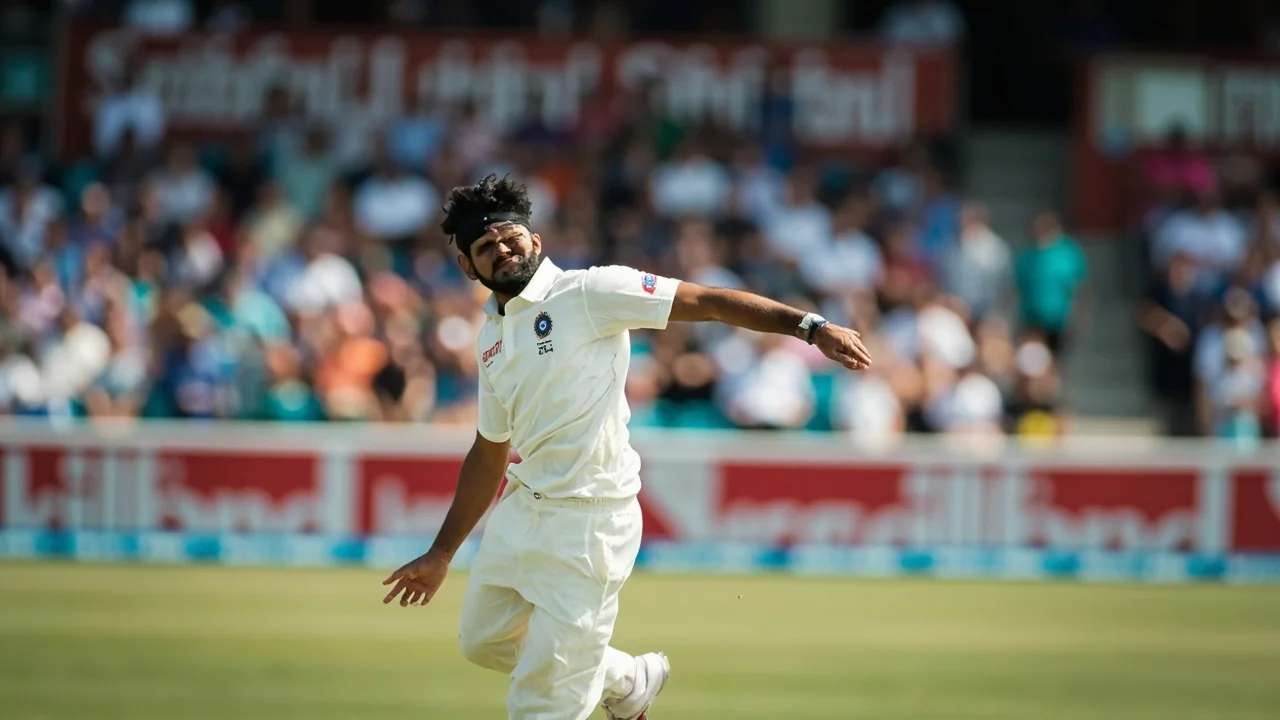
India will travel to Sri Lanka without Jasprit Bumrah. The 31-year-old fast bowler has been ruled out of the two-Test series starting 15 August in Galle because of a left-knee injury that the selectors and the medical team have been managing since the ICC Men's T20 World Cup 2026. Bumrah had only recently returned to the side through the ODI series against England, where he played two matches before the knee flared again and forced him back into rehabilitation.
Uncapped Jammu & Kashmir pacer Auqib Nabi has been called up as Bumrah's direct replacement, earning his first senior India cap the morning after his name appeared in the squad release. Nabi takes a confident first-class record into the tour: 104 wickets across the last two Ranji Trophy seasons, including 60 in 2025-26, and a starring role in Jammu and Kashmir's maiden Ranji Trophy triumph. He was already in Sri Lanka with India A, where he picked up six wickets in two first-class matches on pitches that will be the closest dress rehearsal available for the senior Tests.
The squad call closes one chapter and opens another. Bumrah's absence strips India of their most experienced seam-bowling match-winner on a tour where conditions in Galle and Colombo are expected to reward both pace and spin, while Nabi's arrival gives the selectors a tall, left-arm angle they did not have in the original squad. The medical team has not put a return date on Bumrah; the next checkpoint is a reassessment after the Sri Lanka series ends on 27 August.
What Bumrah's knee timeline looks like
The left-knee issue that has now ruled Bumrah out of the Sri Lanka Tests is not a fresh injury. The medical team has been managing it since the ICC Men's T20 World Cup 2026, where Bumrah bowled through the tournament as India's first-change seamer and remained central to the side's white-ball structure. The ODI return against England was meant to be the controlled ramp back into competitive cricket, and the plan was for him to play three matches, build match-load, and then move straight into the red-ball camp for the Sri Lanka tour.
The plan fell apart after two ODIs. Bumrah featured in only two matches of the England series before the knee responded poorly to the workload, the medical team shut him down again, and the red-ball camp that opens on 8 August in Bengaluru went ahead without him. The current reading is that the knee needs another four to six weeks of rest and strengthening before any red-ball return can be considered. That window takes the Sri Lanka series out of reach and leaves the next realistic comeback date as a home-series window later in the Indian winter.
For a bowler who has built his career on repeatable high-intensity spells, the medical read matters more than the public one. The selectors and Bumrah's management have signalled in past windows that any return to red-ball cricket will only happen once the knee can survive back-to-back five-day workloads without swelling. The Sri Lanka Tests are exactly that workload, and the cleanest medical read is to keep him out of them rather than risk a recurrence that would put the entire home Test season in question.
Auqib Nabi, in first-class numbers
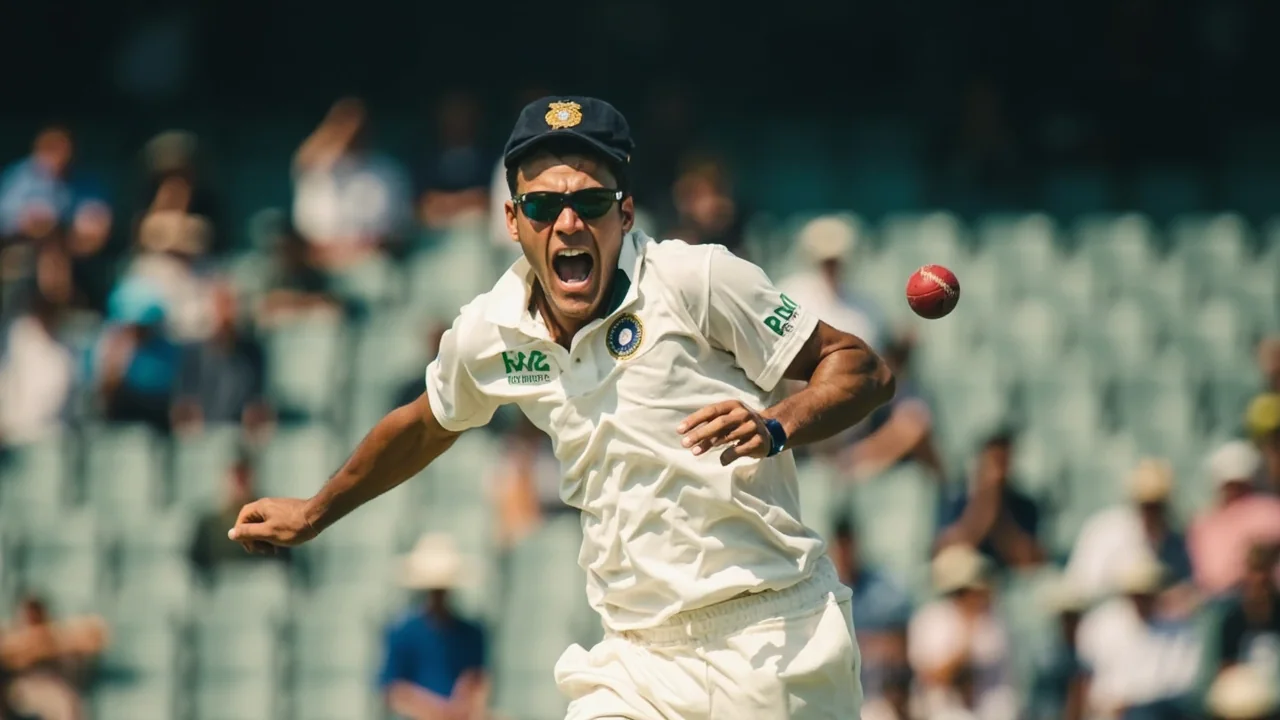
Nabi's first-class record is the clearest data point on what India are buying. Across the 2024-25 and 2025-26 Ranji seasons he has 104 wickets, with 60 of those coming in 2025-26 as Jammu and Kashmir broke through for their maiden Ranji Trophy title. The breakthrough season was not a one-series spike: Nabi was the seam leader in an attack that travelled well, hit hard lengths early, and gave the spin unit enough control to bowl teams out twice. For a fast bowler in domestic Indian cricket, the move from promising to unmissable usually arrives on exactly that kind of sustained workload, and Nabi's two-year numbers are now in the bracket the national selectors have to take seriously.
The India A tour of Sri Lanka was the second piece of evidence the selectors had to weigh. Nabi played two first-class matches on the same island where the senior Tests will be played and took six wickets across them. The pitches in Colombo and Galle are expected to offer early seam movement before the spinners come on, and a tall, left-arm angle that brings the ball back into the right-hander is a useful variation from the right-arm seamers who have dominated India's red-ball attack in recent years. The senior call-up rewards both the Ranji body of work and the Sri Lanka-specific rehearsal.
There is a careful read here on expectations. A maiden India cap on a Sri Lanka Test tour is not a soft landing. The Galle pitch will likely turn from day two, the Colombo surface is usually flatter in the first innings before reversing, and the senior seam attack that Nabi now joins will set lengths that an A-tour bowler has to absorb on the fly. The first-class numbers say he can take wickets at this level; the question the tour will answer is whether he can do it while playing fourth-seamer minutes rather than leading an attack on his own.
The rest of the injury list, and what the squad depth chart looks like
Bumrah is the headline absence, but he is not the only one. Fast bowler Harshit Rana remains out with a hamstring injury that has followed him through the back end of the IPL and the early white-ball windows. All-rounder Nitish Kumar Reddy is recovering from a quad strain sustained during the England ODI series, and off-spinning all-rounder Washington Sundar is working through his own hamstring issue. Sai Sudharsan, the top-order batter who broke into India's red-ball plans over the last home season, is racing to recover from a toe injury in time for the Galle opener. The depth chart that the selectors walk into the tour with is thinner than they would like.
That depth pressure is the wider read on why Nabi's call-up feels straightforward rather than rushed. The original squad already had the seam slots filled by Mohammed Siraj, Akash Deep, and a third-seamer option that was likely to be rotated depending on conditions. Replacing Bumrah with a fourth-seamer who can also bowl long spells if the surfaces flatten gives the captain the kind of cover that lets him attack from both ends without over-bowling the other three. The selection is conservative on workload and aggressive on skill.
Sudharsan's race to be fit is the one the selectors will watch most closely over the next ten days. A fit Sudharsan gives the top order a left-handed option that complements the right-hand heavy batting unit, and his footwork against spin is the cleanest in the India A pool. If he misses the Galle opener, the most likely reshuffle is to push the middle order up by one slot and bring in the next-in-line batter from the squad reserves.
The World Test Championship picture going into Galle
The two-Test series sits inside the ICC World Test Championship 2025-27 cycle, which gives the squad call a wider competitive context than a bilateral tour would. India currently sit fifth on the WTC standings with a points percentage of 48.15, and Sri Lanka are one place below them in sixth at 41.67. A 2-0 series win for India would push them back into the top three of the table; a 1-1 draw would keep both sides in the chasing pack; a Sri Lanka win would tighten the mid-table in a way that makes the next home summer matter even more than it already does.
The points-percentage system means that any Test win on the road counts heavier than a win at home, which is one reason the selectors have not used the Sri Lanka tour as a soft landing for a returning Bumrah. A full-strength attack in Galle is also a full-strength attack that has to deliver on a surface that historically rewards disciplined spin. The combination of new-ball wickets in the first hour and long spin spells in the middle sessions is the kind of Test that India have won often in recent years, and the captaincy template around that combination is now established enough that the team does not need Bumrah to solve it on his own.
What Bumrah's absence does change is the match-up read against Sri Lanka's left-handed batters. The original attack had a right-arm pace spearhead in Bumrah whose angles worked into the right-handers and across the left-handers. Without him, the captain has fewer natural match-ups against a Sri Lanka batting order that leans left-handed in the top order. Nabi's left-arm seam is the cleanest tactical answer to that problem, and the tour will be the first time the selectors get to see whether the match-up reads translate from domestic cricket to international cricket.
The fixtures and what each Test asks of the seam attack
The first Test is scheduled for 15-19 August in Galle, with the second Test following on 23-27 August in Colombo. Galle has historically been the more spin-friendly of the two venues, with the surface usually starting flat and then turning sharply from the second afternoon. Colombo's SSC surface tends to be flatter in the first innings and offers more even bounce for the seamers, before reversing later in the match. The two grounds ask different questions of the seam attack, and that is part of why a fourth-seamer option in the squad is valuable even if he only plays one of the two Tests.
For the Galle Test, the most likely reading is two specialist seamers plus the all-rounder seam option, with three spinners in the XI. For the Colombo Test, the most likely reading is three specialist seamers plus the all-rounder, with two spinners. Nabi fits the seam-heavy Colombo template more naturally than the spin-heavy Galle one, but a left-arm angle in Galle can also be used as a fifth-bowler option if conditions help early swing. The captain has more tactical flexibility now than he did before the squad update.
The travel window itself is short. The Bengaluru red-ball camp runs through 7 August, the squad flies to Sri Lanka on 8 August, and the players have six days to acclimatise before the Galle opener. The acclimatisation period is when Nabi's recent India A experience becomes most useful: he has already bowled on these grounds, in this climate, against Sri Lanka A batters who are now part of the senior squad. That familiarity is the kind of edge that does not show up in first-class numbers but matters across a five-day Test.
What this means for the next T20 World Cup cycle
The T20 World Cup read on Bumrah's knee is the longer arc that the squad call sits inside. India are the defending T20 World Cup champion after the 2024 title in the West Indies, and the next edition sits inside a calendar where the selectors are already making workload decisions around Bumrah's body. A red-ball series in Sri Lanka is exactly the workload a 31-year-old fast bowler cannot afford to take on if the T20 World Cup cycle is the priority. The conservative read is to manage the knee now and keep the white-ball door open for the next T20 World Cup window.
Nabi's entry, by contrast, has no T20 World Cup implications for now. He is a red-ball selection in a red-ball squad, and the T20 World Cup squad for the next cycle is selected from a different player pool. The way a Test debut in Galle or Colombo affects his white-ball trajectory is through confidence and reputation rather than direct selection. A successful Test tour puts him in the conversation for the wider all-format pool; a quiet one keeps him in the red-ball reserve. The selectors will be watching the temperament numbers as closely as the wicket numbers.
The wider T20 World Cup framing sits on the T20 World Cup coverage on Quriousbit, where the squad reads, the captaincy template and the workload math are tracked separately from the Test tour. The Test tour is the immediate story; the T20 World Cup is the calendar that the immediate story is being managed against. Reading both stories together gives the cleanest picture of where India's fast-bowling depth is heading into the rest of 2026 and into 2027.
Frequently asked questions
Why has Jasprit Bumrah been ruled out of the Sri Lanka Tests?
Bumrah has been ruled out because of an ongoing left-knee injury that the medical team has been managing since the ICC Men's T20 World Cup 2026. He returned briefly through the ODI series against England, played two matches, and was shut down again when the knee responded poorly to the workload.
Who is Auqib Nabi and what has he done in first-class cricket?
Auqib Nabi is a 25-year-old fast bowler from Jammu and Kashmir. Across the 2024-25 and 2025-26 Ranji Trophy seasons he took 104 wickets, including 60 in 2025-26, and he was a key part of Jammu and Kashmir's maiden Ranji Trophy triumph. He played the recent India A tour of Sri Lanka and took six wickets in two first-class matches.
When and where are the Sri Lanka Tests being played?
The first Test is scheduled for 15-19 August 2026 at Galle, and the second Test is scheduled for 23-27 August 2026 at Colombo. The series is part of the ICC World Test Championship 2025-27 cycle.
Who else is missing from the India squad through injury?
Harshit Rana (hamstring), Nitish Kumar Reddy (quad) and Washington Sundar (hamstring) are all out of the tour, while Sai Sudharsan is racing to recover from a toe injury in time for the Galle opener.
What is India's position on the WTC standings?
India sit fifth on the ICC World Test Championship 2025-27 standings with a points percentage of 48.15. Sri Lanka are one place below in sixth at 41.67. A 2-0 series win in Sri Lanka would push India back into the top three.
When is Bumrah expected to return to cricket?
The medical team has not announced a return date. The current read is four to six more weeks of rest and strengthening, which would put the next realistic red-ball comeback window in the home Test season that opens in October 2026.
Does this squad call affect the T20 World Cup plans?
Not directly. Bumrah's T20 World Cup workload is being managed separately, and Nabi is a red-ball selection in a red-ball squad. The Test tour outcome will feed into the wider all-format depth chart, but the T20 World Cup squad is selected from a different pool.
The clean read on 3 August 2026
India have lost their first-choice fast bowler for a tour that matters in the WTC table, and they have replaced him with a domestic bowler whose first-class numbers earned the call on their own merit. The medical team is managing Bumrah's knee for the longer T20 World Cup cycle rather than for this one series. Nabi gets a debut window on pitches he has already bowled on. The rest of the injury list is the kind of depth pressure that tours routinely absorb. The Galle opener on 15 August is the next verifiable moment, and the team selection card that morning will be the cleanest single piece of evidence on how the selectors plan to use the new squad shape.