The 29 July 2026 squad in one paragraph
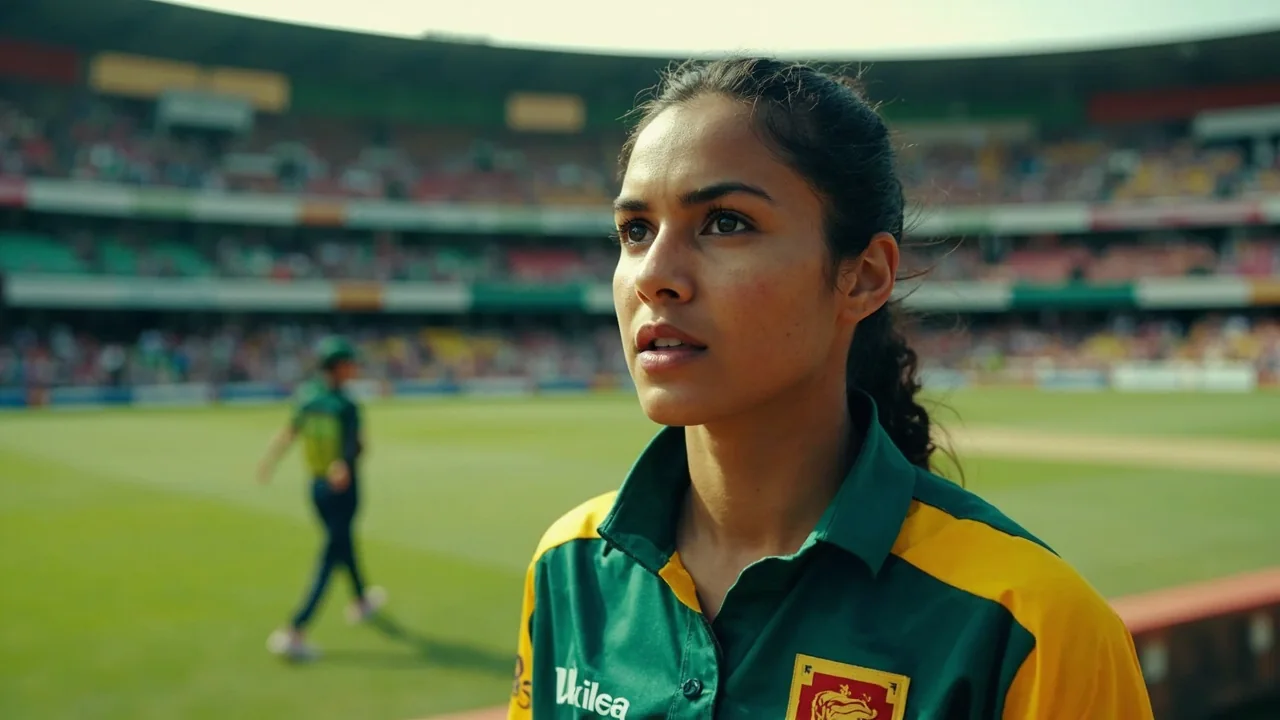
Sri Lanka Cricket named a 15-player squad on 29 July 2026 for a three-match home Women's T20I series against Pakistan Women, with the first ball scheduled for 10:00 AM local on Friday, 31 July at the Rangiri Dambulla International Stadium. The series is a standalone bilateral window, not part of the ICC's Future Tours Programme, and it sits between the Women's T20 World Cup earlier in the year and the start of the next qualification cycle for the 2028 edition. Three changes from the squad that went to the World Cup: top-order batter Sanjana Kavindi and left-arm spinner Chamudi Praboda, both 19, get their first senior call-ups from the U-19 pathway, and 19-year-old fast bowler Rashmika Sewwandi returns to the side after a break. Out go Hansima Karunaratne, Mithali Ayodhya, and Chethana Vimukthi, the last of whom had joined the World Cup squad as an injury replacement for Shashini Gimhani.
The framing matters. The selectors were explicit, in the announcement carried by Sri Lanka Cricket and local outlets, that the changes are a measured reset rather than a rebuild. The batting core that carried the side through the World Cup - Harshitha Samarawickrama behind the stumps, Hasini Perera at the top of the order, Vishmi Gunaratne alongside her - stays intact. The spin pair of Kavisha Dilhari and Sugandika Kumari stays intact. The seam pair of Kawya Kavindi and Malki Madara stays intact. The captain stays. The reading is that the squad is being asked to absorb three new faces without disturbing the identity that produced the recent 2-1 ODI series win in India, where Athapaththu led from the front with the bat.
Who is in: the three fresh faces and what each brings
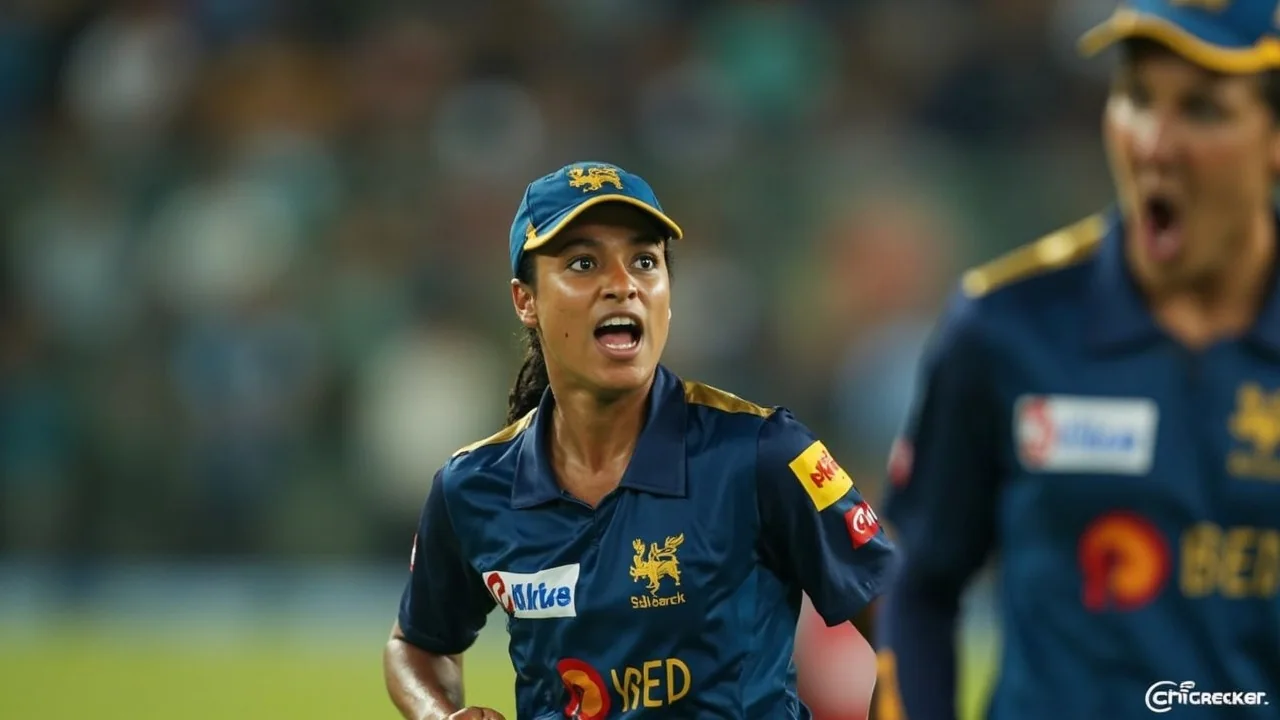
Sanjana Kavindi is a top-order batter who has come through the Sri Lanka U-19 setup. Her inclusion is the clearest of the three changes to read: Sri Lanka's top order has been carrying the bulk of the run-scoring load for two years, and the selectors are looking for a left-handed top-order option who can absorb the new-ball phase if one of the existing top three breaks down. Kavindi is a 19-year-old with age-group runs behind her, and a bilateral home series against Pakistan is the lowest-risk runway to hand her a senior debut.
Chamudi Praboda is a left-arm spinner who has also come through the U-19 ranks. Her selection answers a different question. Sri Lanka's spin attack has been built around Dilhari's off-spin and Kumari's left-arm spin for the last two cycles, and the selectors have not had a young left-arm spinner in the squad to understudy the senior pair. Praboda gets that understudy role. Whether she plays in the XI will depend on the surface at Dambulla and whether the selectors want to carry two left-arm spinners or balance the attack with the extra seam option of Sewwandi.
Rashmika Sewwandi is the most tactical of the three inclusions. She is a 19-year-old fast bowler who has been part of the squad group before the World Cup, and her return is the selectors' response to a specific workload question. Through the World Cup, Sri Lanka's three seam options (Kawya Kavindi, Malki Madara, and the now-omitted duo) carried the bulk of the overs, and Sewwandi's absence from the squad was the closest thing to a rotation gap. Her return is not a shock recall; it is a planned rotation that puts another genuine new-ball option in the squad for the Pakistan series.
Who is out: Karunaratne, Ayodhya, and Vimukthi
Three names are noticeable by their absence. Hansima Karunaratne is the most established of the three; she was part of the World Cup squad and had been a fringe batting option through the cycle. Mithali Ayodhya is a younger batter who had been in and out of the squad across the last 12 months. Chethana Vimukthi joined the World Cup squad as an injury replacement for Shashini Gimhani, the off-spinning all-rounder who was ruled out mid-tournament, and that replacement slot was the cleanest read on her World Cup involvement.
The selectors did not frame the omissions as form drops. The most likely reading is that the squad was reshaped to accommodate the three new faces, and the three omissions are the players whose roles overlapped most directly with the inclusions. Karunaratne's batting slot overlaps with Sanjana Kavindi's top-order position. Vimukthi's seam-bowling all-rounder slot overlaps with Sewwandi's return. Ayodhya's middle-order slot overlaps with Praboda's left-arm spin spot if the selectors choose to play two left-arm spinners. The squad is the same size and the same role shape, but the personnel has been rotated.
For the players who missed out, the bilateral home series is a pointing signal rather than a verdict. Sri Lanka's next Women's T20I window - which falls later in the southern-hemisphere summer - gives the selectors a chance to re-include any of the three with no consequence, and the talent pathway is shallow enough that omissions from one bilateral squad are not career-defining. The 31 July fixture is the cleanest read on whether the new faces fit, and the selectors have left themselves room to bring back the omissions if the Pakistan series asks for a different shape.
Chamari Athapaththu as captain, and the leadership question that follows
Athapaththu stays as captain. She led Sri Lanka to the 2-1 ODI series win against India earlier in the month, and she led the side through the World Cup. The selectors' decision to retain her as captain for the Pakistan series is consistent with the rest of the squad's continuity: the batting core stays, the spin pair stays, the seam pair stays, the captain stays. The three changes are about player rotation around the stable core, not about the leadership structure.
The interesting question is what happens at the end of Athapaththu's cycle. She is the all-time leading run-scorer in Sri Lanka women's T20I cricket, and she has been the captain for the last three cycles. The selectors are not asking that question publicly, and the 31 July fixture is not the venue to answer it. But the inclusion of Sanjana Kavindi at the top of the order is the closest thing to a long-term succession read: if Kavindi debuts and performs, the selectors have a young top-order option to build around when the time comes. That is a long-term framing, not a Pakistan-series framing.
For the Pakistan series specifically, the captaincy question is straightforward. Athapaththu will bat at the top of the order, bowl her left-arm spin through the middle overs, and captain the side. She has been doing this for the last three cycles, and the Pakistan series is another three-match window in the same pattern. The fantasy cricket read on captain picks for the series follows that pattern: Athapaththu as captain and vice-captain is the default template, with the seam-bowling all-rounders and the wrist-spin options as the differential captain picks.
The Dambulla surface: what the venue tells us about the XI
The Rangiri Dambulla International Stadium has been a Sri Lankan cricket home venue for 15 years, and the surface profile is one of the more consistent in the country. The pitch tends to offer true bounce through the first half of the innings, slows marginally in the second half, and rewards spin in the middle overs without degenerating into a turner. Sri Lanka's seam attack has historically been more effective at Dambulla than at the higher-altitude southern African grounds, and the left-arm spin options in the squad have a track record at the venue.
The expected XI shape follows the venue profile. The top order will be Athapaththu, Vishmi Gunaratne, and Hasini Perera, with Harshitha Samarawickrama at four and behind the stumps. The middle order is Imesha Dulani, Nilakshika Silva, and Kaushini Nuthyangana, with Kavisha Dilhari at eight and Sugandika Kumari at nine. The seam attack will be Kawya Kavindi and Malki Madara opening the bowling, with Rashmika Sewwandi as the third seam option. The question - and the only one the squad announcement leaves open - is whether the selectors play Chamudi Praboda as the second left-arm spinner alongside Kumari or carry the extra batting option and play only one of the two left-arm spinners.
For the fantasy read on the series, the venue profile points towards wrist-spin and left-arm-spin captain picks, with the seam-bowling all-rounders as the differential option if the pitch offers less turn than the venue profile suggests. The three-match window at the same venue gives the fantasy operator a clean read on the surface after the first innings of the opener, and the team combinations that win the opener will be the team combinations that the field over-corrects on for the second match. That is the standard bilateral-series captaincy pattern, and Dambulla gives it the cleanest possible runway.
Pakistan Women's squad context and the series shape
Pakistan Women's tour of Sri Lanka is a standalone white-ball window covering three T20Is, with the 31 July opener at Dambulla. The series is the away side's read against an Asia Cup opposition that has been among the strongest Asian sides outside India and Australia in the last two cycles. Pakistan's batting core has been built around the top-order pair that has held the innings together through the last three cycles, and the bowling attack has been shaped around the left-arm spin option that has been the wicket-taker through the middle overs.
The series shape is a clean three-match bilateral window with no qualification stakes. That gives both selectors the room to try combinations that the World Cup did not have time for. For Sri Lanka, that is the inclusion of the two U-19 call-ups and the return of Sewwandi. For Pakistan, the corresponding move is likely to be a similar rotation around a stable core, with the bilateral series serving as a testbed for the players who will be auditioning for the next qualification cycle.
The relevance of the series to the 2026 T20 World Cup cycle is indirect. The World Cup has already concluded, and the bilateral series is not part of the qualification pathway for the 2028 edition. The series is relevant because it is the cleanest available read on how the two Asian programmes are positioning themselves for the next cycle, and because the squad choices the selectors make in July 2026 are the choices that the data record will show when the next cycle starts. Sri Lanka's read is a measured reset around a stable core. The Pakistan series will tell us whether the same framing holds on the other side.
What the squad announcement tells us about the next qualification cycle
The single most important read from the squad is what it says about the next Women's T20 World Cup qualification cycle. Sri Lanka is not rebuilding. The 15-player list holds 12 of the World Cup squad, with three targeted additions (Sanjana Kavindi for top-order depth, Chamudi Praboda for left-arm spin depth, Rashmika Sewwandi for new-ball seam depth). The selectors have signalled, through that composition, that they intend to take the World Cup group into the next cycle largely intact, with two maiden call-ups and one returning pacer to compete for slots rather than to replace the incumbents.
That decision has a cost. Some players who might have forced their way into a rebuilding squad will have to wait for the next round of opportunities. The cost is justified, in the selectors' view, by the stability it gives Athapaththu: a captain who knows her bowling unit, knows her batting order, and knows which combinations work at Dambulla. The Pakistan series is the first sustained test of that stability against a full-strength Asian opposition, and the squad composition is the clearest possible signal that the selectors are not asking the squad to evolve yet.
For the women-in-cricket data record, the squad announcement is the first public evidence of where the post-Women's-T20-World-Cup phase starts for Sri Lanka. The 12 World Cup players and 3 new faces are the squad that will be auditioned through the southern-hemisphere summer, and the combinations that emerge from the Pakistan series will be the combinations that the next qualification cycle carries. The 31 July opener is the first read on whether the reset absorbs cleanly or whether the new faces need more runway than a three-match bilateral window gives.
Three things to watch across the three Dambulla fixtures
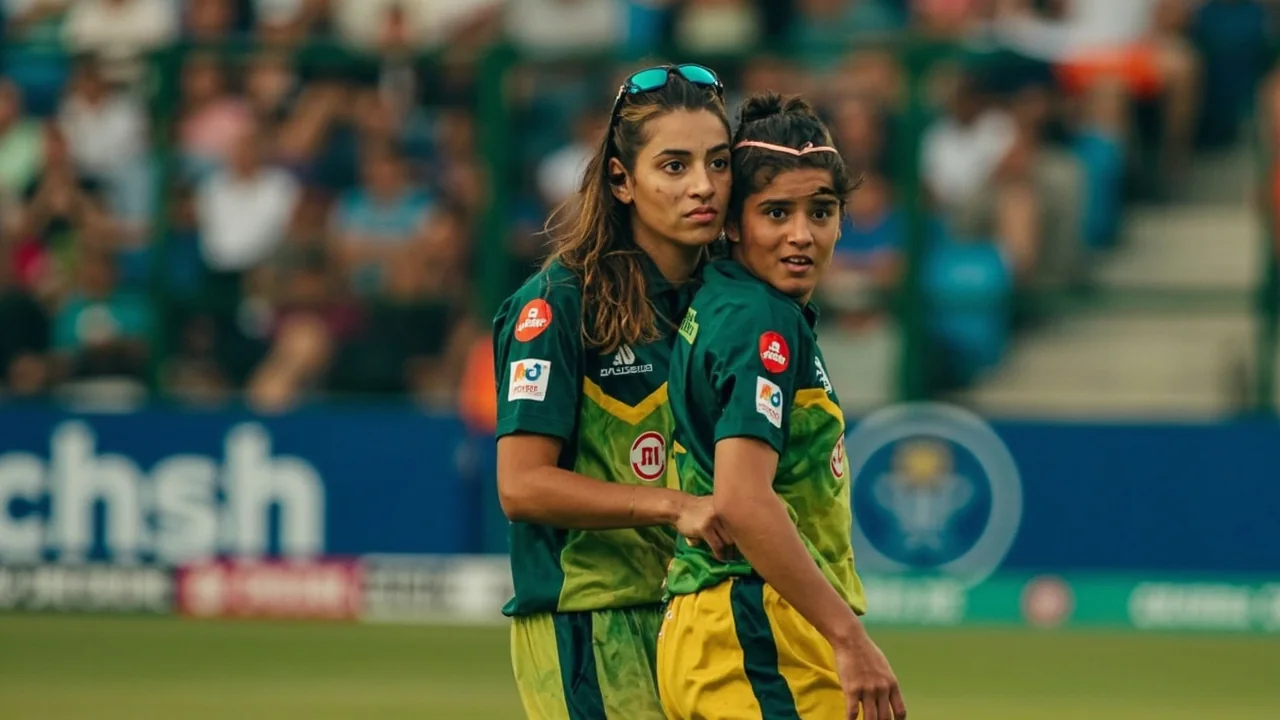
The first thing to watch is whether Sanjana Kavindi gets a senior debut and how her first innings at the top of the order lands against Pakistan's new-ball pair. The selectors have handed her a top-order slot that has been Athapaththu's domain for the last three cycles, and her debut innings will tell selectors whether the left-handed top-order succession read is real or aspirational. A 20-30 in her first innings would reset the conversation in the right direction; a single-digit score would not derail the squad but would push the conversation back to whether the top-order slot should go elsewhere.
The second thing to watch is how Chamudi Praboda's left-arm spin lands at Dambulla. The selection is the U-19 to senior pathway test, and a wicket in the first two overs would change the conversation immediately. If the selectors choose to play both Praboda and Kumari, the attack shape is two left-arm spinners plus Dilhari's off-spin, which is the deepest spin attack Sri Lanka has put on the park in two cycles. If they choose Praboda as the second spinner, the spin trio is left-arm-left-arm-off-spin, which is a tactical statement.
The third thing to watch is how Rashmika Sewwandi's return fits into the seam attack. Kawya Kavindi and Malki Madara have been the established pair, and Sewwandi's return is the question of whether the three-seam shape is the way forward or whether the squad carries her as a rotation option. A wicket in her first two overs would make the three-seam shape the default; a flat first spell would push the selectors back to the two-seam shape with the spin-trio balance. Either reading is useful for the next qualification cycle.
Retrospective: what the 29 July 2026 squad announcement means for Sri Lanka women's cricket
Looking back at the squad announcement, the read is a measured reset rather than a rebuild. The 15-player list holds 12 of the World Cup squad, with three targeted additions that address specific role gaps rather than a wholesale reshuffle. The captain stays. The batting core stays. The spin pair stays. The seam pair stays. The new faces are the two maiden U-19 call-ups and the returning 19-year-old pacer, and the omissions are the three players whose roles overlapped most directly with the inclusions.
That decision will be tested at the next Women's T20I window. If the reset absorbs cleanly and the new faces deliver, the July 2026 squad will be remembered as the bridge that made the post-Women's-T20-World-Cup continuity possible for Sri Lanka. If the reset absorbs awkwardly and the omissions had been the right calls, the same squad will be remembered as the moment the selectors chose stability over evolution. The Pakistan series in Dambulla is the first read on which of those two readings is correct.
For the wider women's game, the squad announcement is one of the first public signals of how the Full Member nations are positioning themselves for the next qualification cycle. Sri Lanka's read is a measured reset. The Pakistan series will tell us whether the same framing holds on the touring side, and whether the Asian women's cricket landscape is set up for a competitive 2028 qualification cycle. The Dambulla window is the first read on that question, and the squad retrospective sits alongside the wider T20 World Cup 2026 framing on the T20 World Cup desk.
FAQ: Sri Lanka Women squad for Pakistan Women's T20Is (July 2026)
When did Sri Lanka announce the squad for the Pakistan Women's T20Is?
Sri Lanka Cricket announced the 15-player squad on 29 July 2026, two days before the first T20I was scheduled at the Rangiri Dambulla International Stadium.
How many changes were made from the World Cup squad?
Three changes: maiden call-ups for 19-year-old top-order batter Sanjana Kavindi and 19-year-old left-arm spinner Chamudi Praboda, plus the return of 19-year-old fast bowler Rashmika Sewwandi. Players omitted are Hansima Karunaratne, Mithali Ayodhya and Chethana Vimukthi.
Who is captaining Sri Lanka in the Pakistan T20Is?
Chamari Athapaththu continues as captain. She led Sri Lanka to a 2-1 ODI series victory over India earlier in July 2026 and captained the side at the Women's T20 World Cup earlier in the year.
Where are the matches being played?
All three T20Is are scheduled at the Rangiri Dambulla International Stadium, with the first ball at 10:00 AM local on Friday, 31 July 2026.
What is the full 15-player squad?
Chamari Athapaththu (capt), Vishmi Gunaratne, Hasini Perera, Sanjana Kavindi, Harshitha Samarawickrama (wk), Imesha Dulani, Nilakshika Silva, Kaushini Nuthyangana, Kaveesha Dilhari, Nimasha Meepage, Chamudi Praboda, Sugandika Kumari, Malki Madara, Kawya Kavindi, Rashmika Sewwandi.
Who were the new faces in the squad?
Two maiden call-ups - top-order batter Sanjana Kavindi and left-arm spinner Chamudi Praboda, both from the U-19 pathway - and returning fast bowler Rashmika Sewwandi. None of the three had appeared in the World Cup squad.
Which World Cup players were missing?
Hansima Karunaratne, Mithali Ayodhya and Chethana Vimukthi. Vimukthi had joined the World Cup squad as an injury replacement for Shashini Gimhani.
Why was the squad framed as a reset rather than a rebuild?
The 15-player list holds 12 of the World Cup squad, with three targeted additions. The captain, batting core, spin pair and seam pair are all retained. The selectors' framing is continuity around the World Cup group, with two U-19 call-ups and one returning pacer competing for slots rather than replacing the incumbents.