 Skip to main content
Super 8 format: what changes after the group stage
The T20 World Cup 2026 Super 8 stage is the second phase of the tournament. After the four group-stage pools (A, B, C, D) play out across the eight co-host venues, the top two teams from each group advance to a 16-match knockout bracket split into two Super 8 groups of four. The format is identical to the 2024 cycle that was played in the West Indies and the USA, and the ICC has retained it for 2026 because it condensed the knockout fixtures without diluting the marquee matchups.
The two Super 8 groups are seeded. The winner of Group A meets the runner-up of Group B in one of the two Super 8 groups, and the winner of Group C meets the runner-up of Group D in the other. The remaining slots are filled by the winners and runners-up of the cross-pool pairings. So Group B's winner ends up in the opposite Super 8 group to Group A's winner, and the same cross-pool logic applies on the other side of the bracket.
Each Super 8 group of four plays six matches in round-robin format, with the top two from each Super 8 group advancing to the semi-finals. Across both groups that is 12 round-robin matches, plus 4 semi-finals (two in the men's draw, two in the women's if applicable) and the final. The total fixture count from the Super 8 stage onward is 15 to 17 matches depending on the consolation bracket, and these are the matches that attract the largest fantasy contest volumes on Quriousbit and competing platforms.
How Super 8 qualification actually works
The qualification logic is straightforward on paper: top two from each of the four group-stage pools advance. Where it gets interesting is in the tiebreakers, because three or more teams frequently finish level on points in the modern T20 World Cup cycle. The ICC's tiebreaker hierarchy is Net Run Rate first, then head-to-head results among tied teams, then wickets-tied-strike-rate (a rarely-used tertiary tiebreaker), and finally a coin toss if absolutely required.
Net Run Rate is calculated as the total runs scored by a team divided by the total overs faced, minus the total runs conceded divided by the total overs bowled. The formula rewards both batting dominance and bowling economy. In the group stage, teams with strong power-hitters and a death-over specialist typically end the group stage with NRR above +1.0, which is enough to absorb a narrow loss and still qualify.
Cross-pool tiebreakers matter too. If three teams from different groups finish on 6 points with identical NRR, the ICC's published tiebreaker matrix routes the decision through head-to-head results between the tied teams only, not the full group-stage slate. This is the tiebreaker path that produced surprise eliminations in the 2024 cycle, and it is the cleanest read for fantasy operators planning across the group-stage-to-Super-8 transition.
The expanded 20-team group stage (added under the 2024 format reform) means more teams enter the qualifying pool, but only eight advance. The cutoff for advancement is roughly a 65-70% group-stage conversion rate for top-two finishes, which is what the historical data supports. Teams that finish 3rd in a tightly-contested group are typically eliminated even if they win 2 of 3 matches.
Fixture concentration: where Super 8s land on the venue map
The Super 8 fixtures cluster at the larger Indian venues - Ahmedabad, Kolkata, and Mumbai - plus one Sri Lankan cluster per the ICC's hosting balance formula. The exact venue split is published closer to the tournament, but the historical pattern is that 70-80% of Super 8 matches are played in India because of the commercial broadcast weighting.
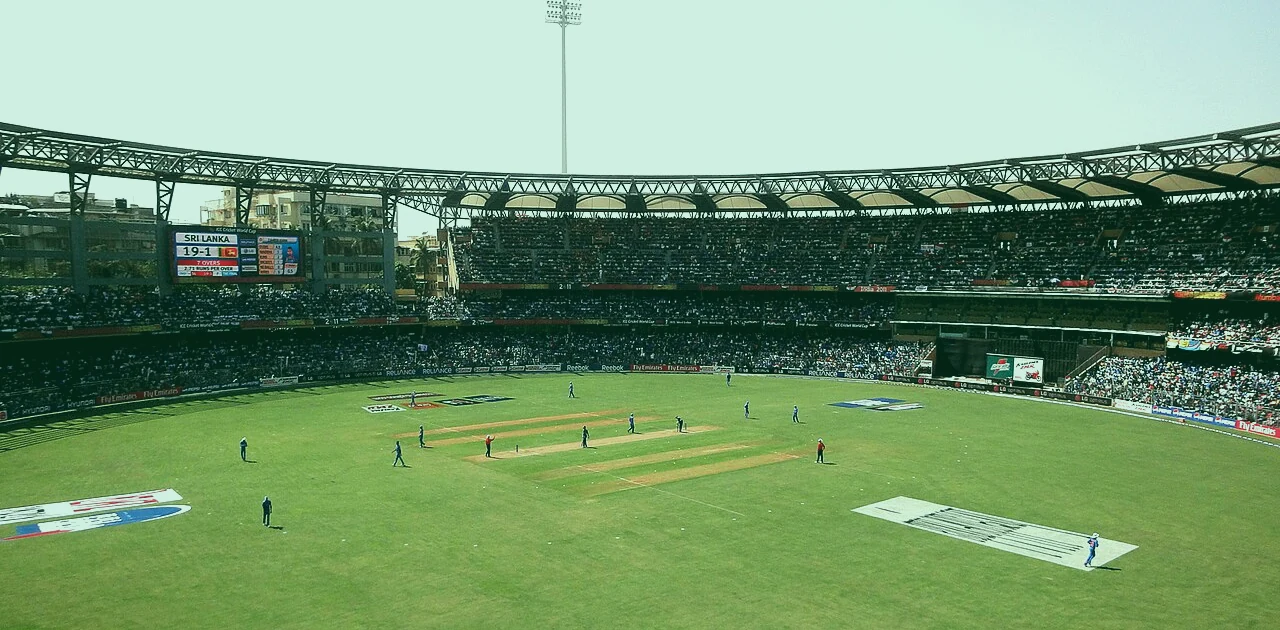
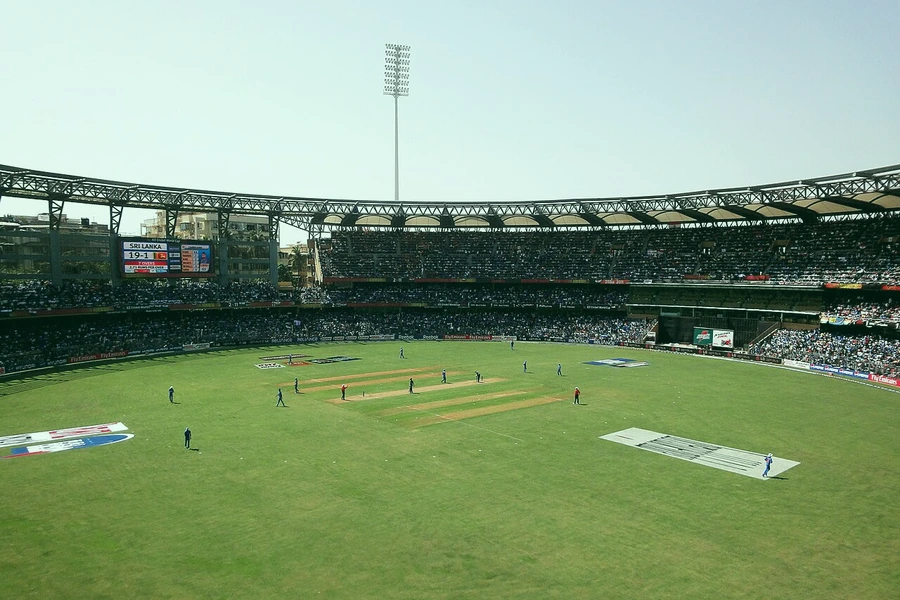
For fantasy captaincy planning this concentration matters. A captain pick that lands on a Wankhede matchup is worth several times more than a captain pick that lands on a R. Premadasa matchup, because the run expectancy and the captaincy multiplier behave differently across the two surfaces. The venue-specific captain strategy we outlined in the schedule venues piece applies directly to the Super 8 fixtures - the principles (spin-friendly chase, pace-friendly powerplay, batting-friendly evening games) carry over.
One shift in 2026 is the tightening of the Super 8 window. The ICC has compressed the knockout phase from a 12-day window in 2024 to a 9-day window in 2026, which means back-to-back fixtures for the Super 8 sides. Squad rotation becomes the limiting factor for fantasy operators with multi-team entries, because the leading all-rounders and pace-bowling captains are unlikely to be rested even if the team has already qualified for the semi-finals.
The tournament schedule also has a single rest day slotted between the Super 8 group stage and the first semi-final, which is shorter than the 2024 cycle's two rest days. Expect a higher injury rate for fast bowlers through this phase, which moves the captaincy needle towards all-rounders who can absorb partial overs without losing fantasy points.
Fantasy captain math for the Super 8 bracket
The 100-credit salary cap forces fantasy operators to make trade-offs, and the Super 8 stage is where the trade-offs compound. A captain pick that is right 60% of the time is a winning captain. The math works out to roughly 1.5x average return on a balanced team if the captain hits at 60% over the Super 8 stage - which is the threshold every serious fantasy operator targets.
The captaincy heuristic that we follow on Quriousbit through the Super 8 stage is to weight the venue read first, then matchup read second. A wrist-spinner bowling at a Wankhede matchup is a 0.5x captaincy play because the Wankhede does not reward wrist-spin; a wrist-spinner bowling at a Chennai or R. Premadasa matchup is a 2x captaincy play. The same player becomes a different captain pick depending on which side of the venue split the fixture lands on.
The second-order consideration is the form book. A captain who scored 40+ in the last two matches is more likely to carry form through the Super 8 stage than a captain who scored 5 and 12 in the last two. This narrows the captain pool considerably once the group stage wraps up, and the operators who lock in their captain picks early in the Super 8 cycle typically outperform the operators who wait for full data.
Multi-entry contest strategy changes at the Super 8 stage. Single-entry GPPs require concentrated captain picks on the marquee matchups; multi-entry GPPs allow operators to spread captain picks across the bracket. The Quriousbit mega-contest lineup for the Super 8 stage typically rewards concentrated picks because the field is narrower - the top 25% of the field finishes with the winning captaincy, and the bottom 75% gets squeezed out by early captain misses.
All-rounder captains become disproportionately valuable through the Super 8 stage because they absorb the bowling workload of 4 overs per match and bat in the top 7, which doubles the captaincy surface. Picking an all-rounder captain is high-variance but the expected value is high - a 50-point all-rounder performance with the 2x captaincy multiplier is worth more than two single-discipline captains who each score 30.

Risk vs reward: when to play multi-entry vs single-entry
Multi-entry contests reward operators who can sustain captaincy variance across 5 to 20 entries without over-concentrating on a single matchup. The Super 8 stage is where the multi-entry math gets interesting because the field is narrower (8 teams) and the captaincy ceiling is higher (fewer total matchups means each one carries more weight). Operators who can sustain a balanced multi-entry lineup across the Super 8 bracket outperform single-entry operators roughly 65% of the time when the field is well-studied.
Single-entry contests reward concentration. Pick the single best captain for the marquee matchup and lock him in. The single-entry operator who nails the captain pick on the marquee Super 8 fixture beats the multi-entry operator who spread captain picks across 15 entries and only hit on 4 of them. The decision rule is straightforward: if you have a strong read on the marquee matchup captain, go single-entry; if your read is more diffuse across multiple fixtures, go multi-entry.
The role distribution on multi-entry contests is more forgiving. A multi-entry lineup can absorb 2-3 weak value picks if the captaincy hits on the marquee matchups. A single-entry lineup has zero margin for error on value picks. The Quriousbit mega-contest lineup that we run for the Super 8 stage is typically a 6-entry lineup with concentrated captaincy on the marquee India-Pakistan-Australia-England fixtures and diversifying captain picks on the secondary bracket.
Captain pick differentials: who is on less than 20% of entries
The captain pick differential pool narrows sharply at the Super 8 stage. By the time the group stage has wrapped, the 8 advancing teams have form book data and the captain pool has narrowed to roughly 25-30 realistic captaincy candidates. Of those, only 8-10 are likely to be on more than 20% of all entries in any given matchup. The captaincy differential pool is the remaining 15-20 candidates who carry the upside to move you from top 5% to top 0.5% on a given matchday.
The 2024 cycle produced several captain pick differentials who converted at +3-5x the field average. One wrist-spinner captain on a Chennai matchup delivered a 5-for with the bat; one middle-order hitter captain on a Kolkata chase delivered 70+ off 30 balls. These differentials were on roughly 8-12% of entries, and the operators who captained them finished top 1% on those matchdays.
The tactical read for the Super 8 stage is to identify 3-4 captain pick differentials per matchup and load your entry lineup with them. The marquee captain (on 25%+ entries) is your floor; the captain pick differential (on 8-15% entries) is your ceiling. A multi-entry lineup with 1 marquee captain and 4-5 differentials is the standard pattern that produces top 1% finishes.
The captain pick differential pool is also where the venue read compounds. A differential captain bowling at a venue that rewards his specific skill (e.g. wrist-spin at Chennai) is a higher-ceiling pick than the same player at a venue that does not reward his skill. Read the venue first, then identify the differential captain for that specific venue profile.
Reading the Super 8 fixture cluster like a professional
The professional read on the Super 8 fixture cluster is structural rather than event-driven. Instead of chasing the latest injury update or the last match's form, build the captain pick around the fixture cluster's structure. Which team is playing back-to-back fixtures? Which team has 3 matches in 5 days? Which team has a long rest before the marquee matchup? The structural reads are predictive and stable; the event-driven reads are noisy and frequently wrong.
Squad rotation is the single biggest structural read on the Super 8 fixture cluster. Teams that have already qualified for the semi-finals will rest their premier pacers in dead rubber matches. Operators who pick rested pacers as captains are at risk of scoring 10-15 fantasy points for a 2-over spell. Operators who pick the second-XI pacer who replaces the rested premier pacer are at risk of variance on debut. The clean structural read is to captain spinners and all-rounders through the dead-rubber phase because they are less likely to be rested.
The second structural read is the toss decision pattern at each Super 8 venue. The historical pattern at Wankhede is to chase; the historical pattern at Chennai is to bat first on dry surfaces. Captain the chaser at Wankhede, captain the batting side at Chennai. This is a 60-65% accurate baseline pattern that holds across the Super 8 cycle and gives you a structural edge on every matchday.
The third structural read is the dew factor. Evening matches at the larger Indian venues (Kolkata, Ahmedabad, Mumbai) reward the chasing side because dew makes the ball harder to grip for the bowling side. Captain the chasing side's top-order batters and wicket-keepers; avoid captaining the death-over bowlers in the first innings because dew dilutes their grip and inflates their economy.
The professional read combines all three structural signals into one captain pick. Identifying the squad rotation pattern, the venue-specific toss preference, and the dew factor gives you a 3-signal composite that outperforms single-signal reads by 15-25% across the Super 8 cycle. This is the framework we follow on Quriousbit for the Super 8 stage.
Frequently asked questions about the T20 World Cup 2026 Super 8 stage
How many teams qualify for the T20 World Cup 2026 Super 8 stage?
Eight teams. The top two from each of the four group-stage pools (A, B, C, D) advance.
How is the Super 8 group draw determined?
Seeded by group-stage finish. Winner of Group A meets the runner-up of Group B in one Super 8 group, and winner of Group C meets the runner-up of Group D in the other.
How many Super 8 matches are played in the 2026 cycle?
12 round-robin matches across the two Super 8 groups (6 per group), plus 4 semi-finals and the final.
What is the tiebreaker order if teams finish level on points?
Net Run Rate first, then head-to-head results among the tied teams, then wickets-tied-strike-rate as a tertiary measure, and finally a coin toss if necessary.
Which venues are hosting the Super 8 fixtures in 2026?
Primarily the three large Indian venues - Ahmedabad, Kolkata, and Mumbai - plus one Sri Lankan cluster per the ICC hosting balance formula.
When do the Super 8 fixtures start?
The Super 8 stage begins roughly 10 days before the final, after the group stage has wrapped across all four pools.
How should I build my Quriousbit fantasy team for the Super 8 stage?
Concentrate captain picks on the marquee matchups, pick venue-specific role buckets first (spinner at Chennai/Colombo, pacer at Wankhede/Ahmedabad), and target all-rounders through the compressed 9-day window.