The 8 July 2026 squad announcement in context
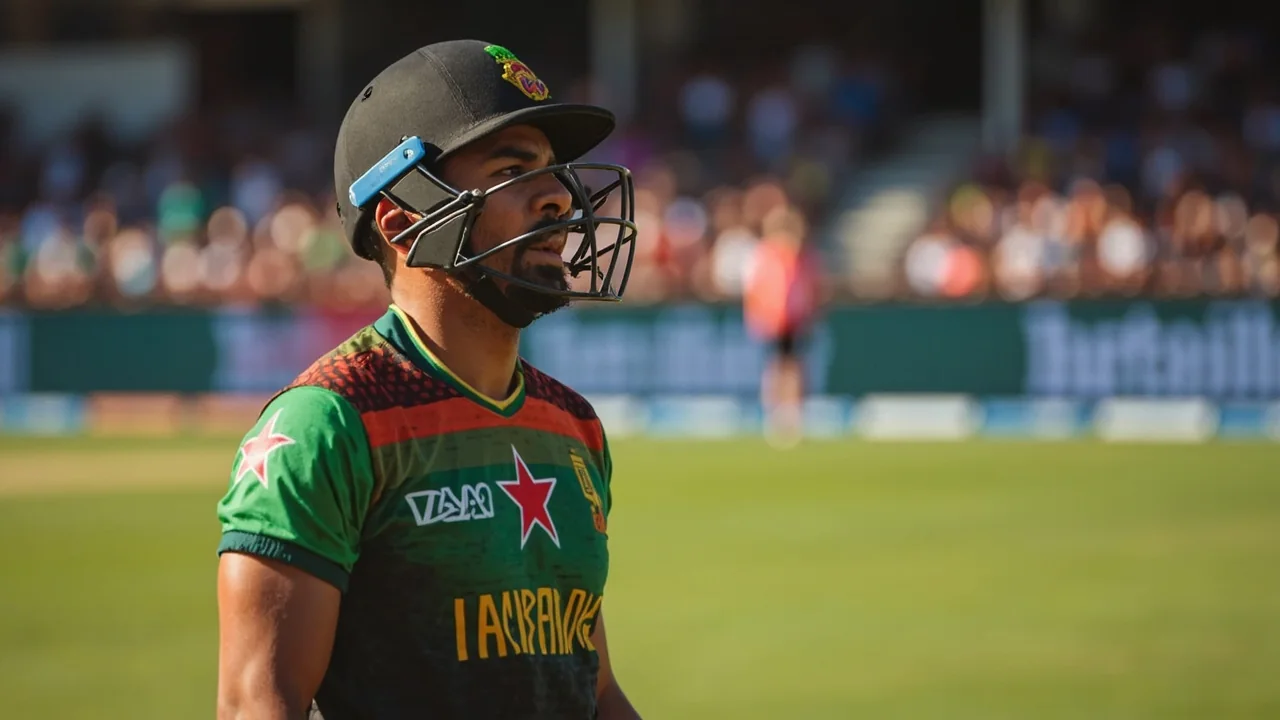
Zimbabwe announced a 15-player squad on 8 July 2026 for a three-match home T20I series against Bangladesh, scheduled for 15, 17 and 19 July 2026 at Queens Sports Club in Bulawayo. The selection was framed by Zimbabwe Cricket as a continuation of the group that reached the Super Eight stage of the ICC Men's T20 World Cup 2026 earlier in the year, where the side topped its first-round pool unbeaten and recorded wins over Australia and Sri Lanka. The headline decision was the retention of Sikandar Raza as captain, a continuity call that placed the post-tournament phase inside an established leadership structure rather than a rebuild.
The World Cup run gave the selectors something they had not had for several cycles: a settled first XI to defend. The wins over Australia and Sri Lanka were the headline results, but the deeper signal from the squad announcement is that Zimbabwe is choosing to preserve the playing identity that produced those wins rather than rotate in younger names. Only two players - Newman Nyamhuri and Milton Shumba - were added to the World Cup core, and both additions were tightly targeted at specific role gaps.
The series itself sits between the World Cup and the start of the next qualification cycle for the 2028 T20 World Cup, which makes it the cleanest possible reading on how Zimbabwe intends to manage the transition. A 15-player squad that holds 13 of the World Cup group is not a transitional squad; it is an incumbent one being asked to confirm its ceiling against a full-strength Bangladesh side that travelled to Zimbabwe for a white-ball tour that began with the ODI leg in Harare.
The two additions: Nyamhuri and Shumba, and what each is for
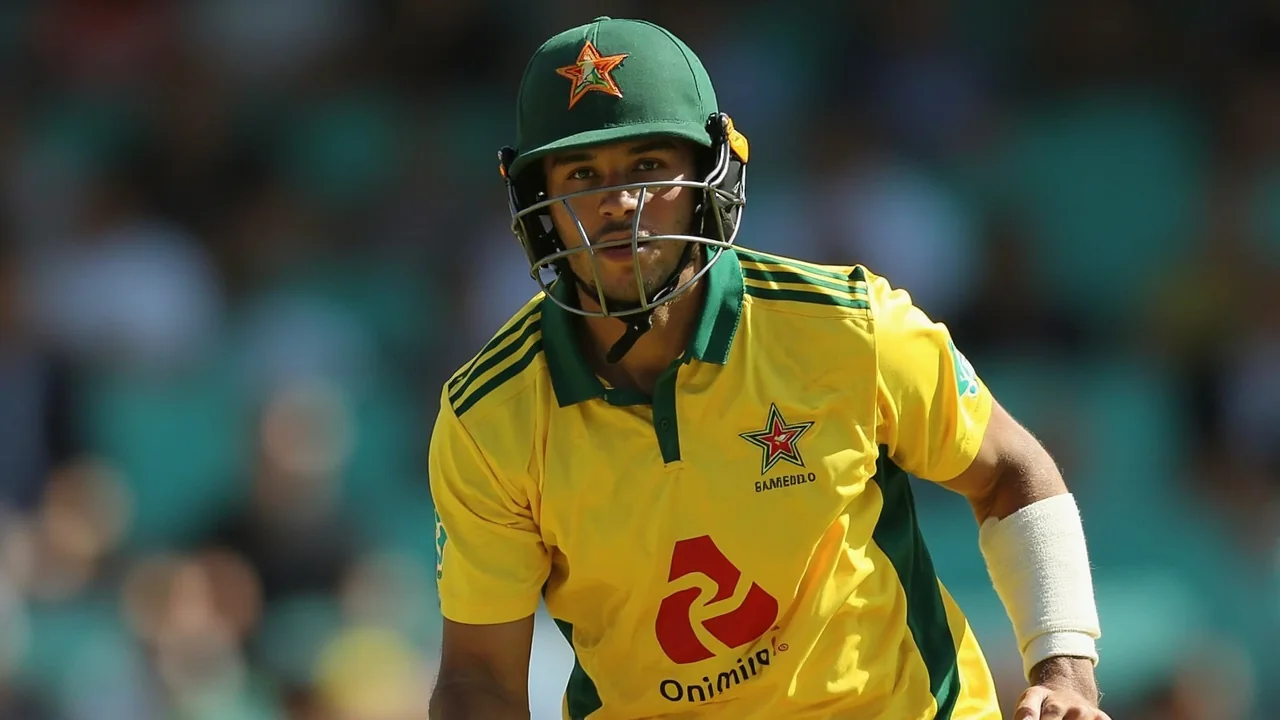
The clearest read of the squad is through the two additions. Newman Nyamhuri is a young fast bowler who had not yet made his T20I debut at the time of the announcement, and his inclusion is the selectors' investment in a new-ball option for the cycle ahead. Milton Shumba returns to the T20I format for the first time since the 2022 T20 World Cup, a four-year gap that frames his selection as a calculated bet on left-handed batting depth in the middle order rather than a sentimental recall.
Nyamhuri's role is pace depth. Zimbabwe's incumbent seam unit carried the bulk of the overs through the World Cup, and the selectors were not looking to disrupt that unit. Instead they were looking one cycle ahead, where one of the senior quicks could move on from T20I cricket or pick up an injury. Bringing Nyamhuri into a low-stakes three-match home series gives him a T20I debut window without asking him to lead the attack - which is the cleanest possible runway for a 20-something fast bowler.
Shumba's role is different. He is a left-handed batter who can bat in the top six and bowl a useful over of left-arm spin, a dual-skill profile that Zimbabwe's middle order did not have a specialist option for through the World Cup. The selectors are not asking Shumba to start ahead of the incumbents - they are asking him to prove he can absorb the role in case of injury or form loss during the next qualification cycle. The Bangladesh series, with three matches in five days at a familiar Bulawayo surface, is the right audition stage for that brief.
Ben Curran's retention and the injury-replacement question
Ben Curran kept his place in the squad after joining the World Cup squad as an injury replacement earlier in the year, and the selectors signalled with that decision that he was no longer a stopgap. Curran had not played a T20I at the time of the squad announcement and could make his debut in the Bangladesh series, which makes his retention the most analytically interesting call in the squad: Zimbabwe had a free hand to return to a player outside the World Cup group, and chose instead to back the player who was parachuted in mid-tournament.
The read here is continuity of selection logic rather than continuity of player. The selectors valued the fact that Curran had been inside the World Cup environment, had trained with the group through the Super Eight, and had absorbed the tactics that produced the wins over Australia and Sri Lanka. Bringing in a fresh face would have reset that absorption cycle. The Bangladesh series, with three matches and no qualification stakes, gave the selectors the room to either hand Curran a debut or hold him back without consequence - which is a more flexible position than they would have had if the series had been a knockout.
Who was missing: Cremer, Taylor and Munyonga
Three names stood out by their absence. Graeme Cremer was unavailable with a left-arm fracture, which is a medical absence rather than a selection decision but is consequential for the spin-bowling balance of the squad. Brendan Taylor and Tony Munyonga were absent from the squad that featured at the World Cup, and the absence is harder to read without further context - Taylor is a former captain whose career has spanned several cycles, while Munyonga was a World Cup squad member who did not break into the first XI.
The Cremer absence matters because he is one of the few Zimbabwean spinners with leadership experience and a track record in the format. His injury opens a slot for younger leg-spin options to stake a claim, and the Bangladesh series is the most likely audition stage for those options. For Taylor and Munyonga, the absence can be read either as a rotation decision (the selectors wanted to look at younger players in those roles) or as a performance decision (the incumbents did not do enough at the World Cup to hold their spots). The squad announcement did not clarify which, and that ambiguity is part of the post-World Cup transition that the series is designed to clarify.
The Bulawayo factor: venue, surface and what it favours
Queens Sports Club in Bulawayo has hosted the majority of Zimbabwe's recent home internationals, and the surface profile is one of the most consistent in southern Africa. The pitch tends to offer true bounce through the first half of the innings, slows marginally in the second half, and rewards spin in the middle overs without degenerating into a turner. For the Bangladesh bowlers - particularly the left-arm spin of Shakib Al Hasan's generation, or the wrist-spin options that Bangladesh has developed more recently - the venue is competitive rather than hostile.
For Zimbabwe, the venue profile plays to their strengths. Raza's off-spin and the finger-spin options in the squad have historically been more effective at Bulawayo than at higher-altitude southern African grounds, and the seamers who topped the World Cup wickets table benefit from the carry the surface offers. The 15-19 July window is also mid-winter in the southern hemisphere, which means cooler evenings, less dew than a summer fixture, and conditions that favour the bowlers who bowl into the evening. Bangladesh, as a touring side, will need to adjust to the Bulawayo specifics quickly, and the three-match format gives them only one misstep of margin.
What the squad tells us about the next qualification cycle
The single most important read from the squad is what it says about the next ICC T20 World Cup qualification cycle. Zimbabwe is not rebuilding - it is consolidating. The 15-player list is 13 players who were at the World Cup plus two targeted additions (Nyamhuri for pace depth, Shumba for left-handed batting depth). The selectors have signalled, through that composition, that they intend to take the World Cup group into the next cycle largely intact.
That decision has a cost. Some younger players who might have forced their way into a rebuilding squad will have to wait for the next round of opportunities. The cost is justified, in the selectors' view, by the stability it gives Raza: a captain who knows his bowling unit, knows his batting order, and knows which combinations work in which conditions. The Bangladesh series is the first sustained test of that stability against a full-strength Asian opposition.
For Indian fantasy cricket operators watching from outside the series, the squad tells a different story. Zimbabwe's core is now well-mapped in T20I data: Raza as captain and off-spinning all-rounder, Brian Bennett as the top-order anchor after his unbeaten 97 against India at the 2026 World Cup, the seam unit that carried the World Cup wickets table, and the wrist-spin options that have been the team's middle-overs weapon. The Bangladesh series confirmed the composition of that core going into the next cycle.
The broader post-World Cup phase for associate-and-fringe Full Members
Zimbabwe is one of a handful of Full Member nations whose T20I cricket sits between the marquee global tournaments. The squad announcement reads in the same register as the post-tournament phases other Full Members go through: keep the core, add targeted depth, and use the bilateral window to settle questions that the World Cup did not have time to answer. The Bulawayo series is precisely that kind of window.
What makes the Zimbabwe case distinct is the size of the gap between the World Cup high (the Super Eight, the win over Australia, the win over Sri Lanka) and the bilateral phase. The selectors could have read the World Cup as a one-off, rotated heavily, and built towards 2028 from scratch. They chose instead to defend the ceiling. The Bangladesh series is the first public evidence of whether that defence will hold.
Where this leaves the Zimbabwe captaincy conversation
The retention of Sikandar Raza as captain closes, for now, the periodic speculation about a successor. Raza has captained Zimbabwe through the 2026 World Cup cycle, through the Super Eight appearance, and into the bilateral phase. The selectors' continued backing of him as captain is the clearest possible signal that the post-World Cup phase will be Raza's to manage, with the same coaching and selection infrastructure that produced the World Cup results.
That continuity has a tactical payoff for fantasy operators who track the side closely. The combination of Raza's off-spin, Raza's middle-order batting, and the batting-order slots around him (Bennett at the top, the seam all-rounders in the middle, the wrist-spin options in the middle overs) has been stable since the World Cup. The Bangladesh series did not disrupt that combination. Operators building longer-form fantasy entries across the Zimbabwe bilateral calendar can read the Raza-led combination as the default template, with Nyamhuri and Shumba as the only meaningful variance points.
Three things to watch across the three Bulawayo fixtures
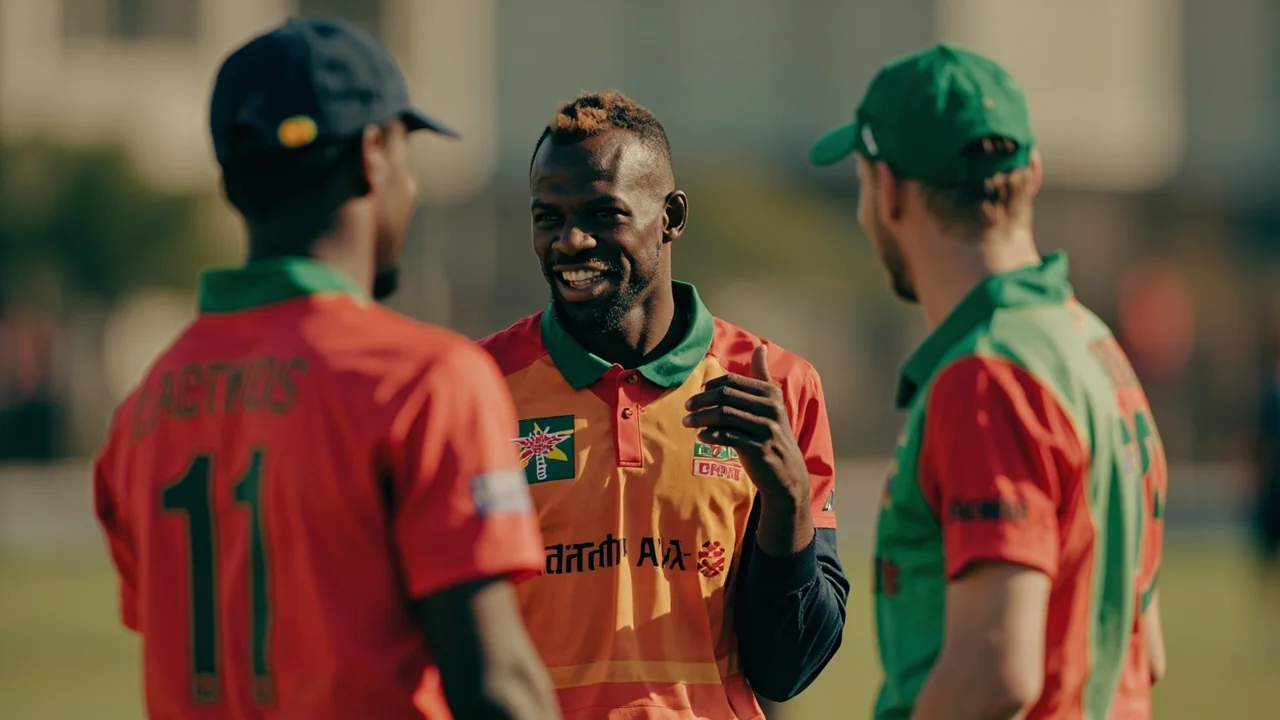
The first thing to watch is whether Nyamhuri gets a T20I debut and how his new-ball spells land on the Bulawayo surface. The World Cup seam unit carried the bulk of the overs, and Nyamhuri's debut window will tell selectors whether the pace depth they invested in for the next cycle is real or aspirational. A wicket in his first two overs would change that conversation immediately; a flat first spell would not derail the squad but would reset expectations.
The second thing to watch is how Shumba bats against Bangladesh's spin options. Bangladesh's spin group has been one of their tactical strengths across formats for several cycles, and Shumba's first T20I innings since the 2022 World Cup will be a direct read on whether his recall was a tactical fit or a sentimental one. A quick 20-30 in his first innings would confirm the selectors' read; a single-digit score would push the conversation back to whether the left-handed middle-order slot should go elsewhere.
The third thing to watch is whether Curran gets his debut and how he fits into the batting order. The World Cup group had a settled top order, and Curran's debut position will tell selectors whether he is a middle-order option or a top-order one. Either reading carries consequences for the next qualification cycle.
Retrospective: what the July 2026 window meant for Zimbabwe cricket
Looking back from the close of the Bulawayo window, the squad announcement on 8 July 2026 reads as the moment Zimbabwe Cricket chose consolidation over transition. The 15-player list was 13 World Cup players plus two targeted additions, the captaincy stayed with Raza, and the bilateral fixtures against Bangladesh were used to settle three specific selection questions (Nyamhuri's pace depth, Shumba's left-handed batting depth, Curran's debut readiness) without disturbing the first XI that had carried the team to the Super Eight.
That decision will be tested again at the next ICC event window. If the World Cup group holds its ceiling through the next qualification cycle, the July 2026 squad will be remembered as the bridge that made that continuity possible. If the ceiling slips, the same squad will be remembered as the moment the selectors chose stability over evolution. The Bangladesh series in Bulawayo was the first read on which of those two readings is correct.
FAQ: Zimbabwe squad for Bangladesh T20Is (July 2026)
When did Zimbabwe announce the squad for the Bangladesh T20Is?
Zimbabwe Cricket announced the 15-player squad on 8 July 2026, a week before the first T20I was scheduled at Queens Sports Club in Bulawayo.
Who captained Zimbabwe in the Bangladesh T20Is?
Sikandar Raza continued as captain. He had captained Zimbabwe through the 2026 T20 World Cup campaign and into the post-tournament bilateral phase.
Who were the new faces in the squad?
Fast bowler Newman Nyamhuri and batter Milton Shumba were the only additions to the squad that had featured at the T20 World Cup. Nyamhuri had not yet made a T20I debut and Shumba was returning to the format for the first time since the 2022 T20 World Cup.
Which World Cup players were missing?
Graeme Cremer was unavailable with a left-arm fracture. Brendan Taylor and Tony Munyonga were also absent from the squad that featured at the T20 World Cup.
Where were the matches played?
All three T20Is were scheduled at Queens Sports Club in Bulawayo, on 15, 17 and 19 July 2026.
What was Zimbabwe's World Cup record that shaped the squad?
Zimbabwe reached the Super Eight stage of the ICC Men's T20 World Cup 2026 after topping its first-round group unbeaten, with wins over Australia and Sri Lanka in the group phase. The Australia win was by 23 runs.
Could Ben Curran make his T20I debut in the series?
Yes. Curran had joined the World Cup squad earlier in 2026 as an injury replacement, kept his place in the Bangladesh squad, and was in line for a T20I debut in the series.
What was the broader context of Bangladesh's tour?
The T20I leg in Bulawayo followed the ODI leg in Harare, completing Bangladesh's white-ball tour of Zimbabwe in July 2026.
Where this fits in our T20 World Cup coverage
This retrospective sits alongside our squad and captaincy reads on the full T20 World Cup 2026 cycle, including the India squad announcement, the Super Eight stage analysis, and the schedule and venues guide. Together they trace how the major Full Member nations have approached the post-tournament phase, and what that phase means for the next qualification cycle. For the wider picture across associate and Full Member T20I cricket, the T20 World Cup 2026 hub on Quriousbit collects the full set of squad retrospectives, venue reads, and captaincy math.